
Scientists and parents tell SBOE middle‑school climate materials need correction; publishers named in public testimony
Get AI-powered insights, summaries, and transcripts
Subscribe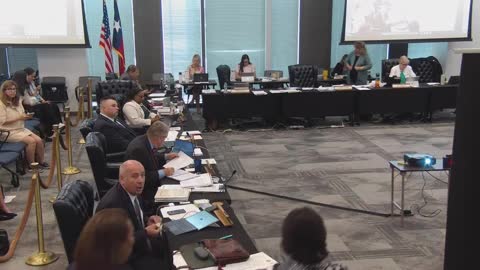
Summary
More than a dozen public testifiers told the State Board of Education that textbook and publisher materials used for eighth‑grade climate science contain factual errors or misleading presentations; testifiers urged the board and TEA to require corrections or replacements.
Public testimony at the June 27 Texas State Board of Education meeting focused heavily on middle‑school climate and environmental science instructional materials, with several speakers urging TEA and the board to require changes to publisher content.
Retired engineers, scientists and local residents — including Marty Cornell, David Peters, Greg Wright and Michael Zeitlin — told board members that materials from publishers used in Texas classrooms, specifically STEMScopes, Houghton Mifflin Harcourt (HMH/McGraw‑Hill), and other vendor products, contained misleading or incorrect claims about the causes of modern warming, the role of water vapor versus carbon dioxide, ocean acidification experiments and the attribution of severe weather to modest recent warming. "All of the publisher materials claim that modern day global warming is the overwhelming result of human activities…This is false," testifier Marty Cornell said during public testimony.
Multiple speakers asked the board to require publisher corrections or to withdraw particular classroom experiments that use tap water and extremely high CO2 concentrations to demonstrate ocean acidification; Michael Zeitlin testified that the HMH student experiment exposed tap water to more than 5,000 parts per million CO2 and turned the freshwater sample "solidly acid," while explaining that real seawater is buffered and would not respond the same way at atmospheric CO2 levels projected in near‑term scenarios.
Other testifiers referenced longer time‑scale climate variability and historical periods — for example, saying Holocene and earlier warm intervals had higher CO2 and temperatures — and cited reports including the IPCC Sixth Assessment Report as part of their critiques. Several speakers also flagged the omission of natural climate drivers and argued that classroom materials had leaned toward advocacy rather than balanced scientific presentation.
Board staff announced the public‑testimony rules at the start of the session and noted that the board had not posted the meeting for a specific subject (standard public testimony rules applied); staff also said there would be no board questions to testifiers during the public testimony period. TEA staff later acknowledged that publisher materials had been reviewed during instructional‑materials processes and that publishers typically provide draft contingencies for charter or approval processes.
The board did not take a formal action on specific climate materials during the June meeting; the session was a public forum for comment. Several speakers asked for TEA or the board to require corrections of specific passages and classroom experiments, or to move those materials through the state's suitability/HQIM pathways for formal review. TEA staff told the board they had prepared review documents and would continue to work with publishers on requested clarifications.