
SBOE approves American Indian and Native Peoples course after removing ABC‑CLIO resource
Get AI-powered insights, summaries, and transcripts
Subscribe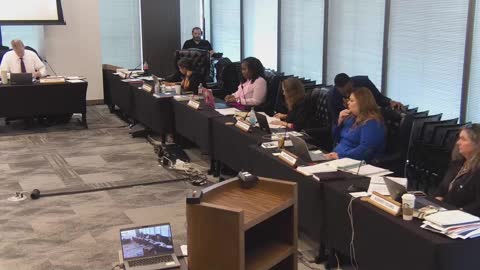
Summary
The State Board of Education voted to approve an innovative American Indian and Native Peoples high‑school course but required removal of an ABC‑CLIO database from the course's recommended instructional materials after weeks of debate and public comment.
The Texas State Board of Education on June 27 approved an innovative high‑school course titled American Indian and Native Peoples, contingent upon removal of the ABC‑CLIO database from the course's recommended instructional materials. The approval followed a days‑long review by committees and a final amendment that the board adopted before voting on the course itself.
Board members said the approval moves the standards for the course forward while separating disputed instructional resources for additional review. "I will say I don't think this is the perfect course. I would probably write it differently," Member Hegman said during debate, arguing the vote would allow quicker movement to a TEEX pathway for a statewide course. Opponents warned the materials contain historical claims they found objectionable. Member Pickering said, "I am appalled. I am absolutely appalled that 1 Texas tax dollar has paid for this junk to be in our schools," citing passages she said framed Founding‑era actions as terrorism.
The board's committee had recommended approval; during floor debate Dr. Ellis moved an amendment to make approval contingent on removing the ABC‑CLIO database material from the application. The amendment passed on a voice/hand vote recorded as 11 in favor and 2 opposed. The main motion as amended then passed by a recorded show‑of‑hands vote the chair announced as 9 in favor and 5 opposed.
TEA staff told the board the amendment removes the ABC‑CLIO resource from the materials the board is approving; staff clarified that the board's action does not itself prohibit a district from using a particular resource locally. The board and staff also discussed state review processes that apply to instructional resources: members referenced HB 100 and HB 1605 and the state "suitability" and HQIM (high‑quality instructional materials) processes as the paths through which materials can be reviewed for state purchasing restrictions in the future.
Board members and staff also noted the course is not new to Texas classrooms: the application packet showed the course was offered at one campus last year, with 42 students enrolled and 88 total across the prior two years. Several members said approving the course standards now would permit the standards to be converted to a TEEX course (Texas Essential Knowledge and Skills–equivalent pathway) more quickly under board procedures, while separate review would consider whether any recommended materials meet suitability criteria.
The board's action resolves the immediate question of state credit for the course: approval grants the standards as a statewide innovative course; the contingency removes the ABC‑CLIO database from the set of recommended materials included in that approval. Board members who opposed the motion said they remained concerned that disputed materials could still be used locally unless and until they failed the state suitability review. Supporters said the vote moves a multiyear development forward and creates a cleaner path to statewide adoption after further vetting.
The board did not adopt a blanket prohibition on specific resources. TEA staff reiterated that instructional materials flagged for concern can be submitted to the state's suitability/HQIM review for determination under recent legislative changes. The renewed innovative course will appear on next agendas for any further procedural steps required by board rules and TEA timelines.
The meeting's committee discussion and the final votes occupied a substantial portion of the June session, with members asking for more robust packet distribution protocols in future cycles so the full board receives committee materials at least one week before the full‑board meeting.