
SBOE hears public testimony, splits on six Generation‑30 charter applicants; three advance, three vetoed
Get AI-powered insights, summaries, and transcripts
Subscribe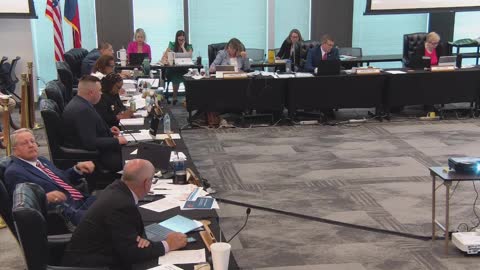
Summary
After hours of public testimony and applicant interviews on June 25, the committee of the full Texas State Board of Education voted to advance three Generation‑30 charter applicants and to veto three others, following procedural "no action" and veto motions.
The State Board of Education’s committee of the full board spent the afternoon of June 25 hearing public testimony, applicant presentations and board questions on six Generation‑30 open‑enrollment charter applications. The board took a sequence of motions that ultimately advanced three applicants and vetoed three.
Quick takeaway (votes at a glance): - Arcadia High School (Houston/Alief area): committee voted not to veto (motion to "take no action" carried); Arcadia moves forward for final contract negotiations. - Fort Worth STEAM Academy (Fort Worth): committee voted not to veto; Fort Worth STEAM moves forward. - Frank Lieu Junior Academy for Music & Arts (Houston): committee voted not to veto; Frank Lieu Junior Academy moves forward. - Museum School of East Dallas: committee initially considered but later voted to veto the application. - Unidos Soccer Leadership Academy (San Antonio): committee later voted to veto the application. - Valenta Academy (Bastrop area): the committee rejected the motion to advance and subsequently voted to veto the application.
What happened: The commissioner had recommended six applicants for the Generation‑30 cycle. Each applicant made an in‑person presentation to the board and answered questions. The meeting also included hours of public testimony: parents, teachers, community leaders and charter advocates spoke both for and against multiple applicants.
Public testimony and issues raised: - Access and equity: speakers opposing several charter proposals (notably Unidos and some Houston applicants) argued that charters can divert operating dollars from already underfunded independent school districts and that some applicants’ enrollment and site plans appeared to favor students with existing advantages. The union leader representing Northside ISD called one proposal “selective access” where families already paying private‑club fees might receive preferential access. - Community demand: supporters argued that the applicants offer distinct, locally demanded options — e.g., arts‑intensive instruction (Frank Lieu/FLAMMA), STEAM and middle‑school acceleration (Fort Worth STEAM Academy), museum‑based enrichment (Museum School of East Dallas) and dual‑language/athletic integration (Unidos). Several parents and students gave emotional accounts of how alternative public models changed their lives. - Operations and facilities: multiple testifiers and board members asked about contract terms, facility leases, and whether applicant‑proposed facilities (for example, Unidos’ proposed location at Soccer Central in San Antonio) were financially stable. Observers flagged public reporting that Soccer Central faced foreclosure proceedings; the applicant said lease negotiations were ongoing and that new ownership had been engaged in planning discussions. - Instructional model and evidence: the Valenta application drew technical scrutiny because its "2‑hour learning" approach (two‑hour focused daily instruction supported by adaptive/AI tutoring) has limited peer‑reviewed evidence in K–12 public contexts, and at least four other states had denied similar models in recent reviews. Applicants describing heavy adaptive/AI use were asked to explain evidence of effectiveness, local comparability and safeguards for screen time and for younger learners. - Special populations: multiple speakers asked how applicants would serve students with disabilities, emergent bilinguals and low‑income families. Several applicants highlighted specific program elements (dual‑language instruction, special education supports, partnerships with universities and regional service centers) and referenced secured or pledged startup funding and community letters of support.
Formal motions and outcomes (committee actions): The committee followed a two‑step sequence for each applicant: first a motion to "take no action" on the commissioner's recommendation (a procedural way to allow the application to proceed without a board veto); if the "take no action" motion failed, the committee then considered a motion to veto the commissioner’s recommendation. Actions taken (summary): - Arcadia High School (Houston/Alief). Motion: "take no action" carried (committee vote 7–4 with 3 abstentions). Outcome: advanced (no veto). - Fort Worth STEAM Academy (Fort Worth). Motion: "take no action" carried. Outcome: advanced (no veto). - Frank Lieu Junior Academy for Music & Arts (Houston). Motion: "take no action" carried. Outcome: advanced (no veto). - Museum School of East Dallas. Initial "take no action" motion passed but the committee later voted to veto the application (final committee vote to veto carried 9–5). Outcome: vetoed. - Unidos Soccer Leadership Academy (San Antonio). Committee initially voted to take no action, but the board later voted to veto the application (final committee veto 9–5). Outcome: vetoed. - Valenta Academy (Bastrop). "Take no action" motion failed; the committee moved to veto and the veto passed (final vote 10–3). Outcome: vetoed.
Post‑vote notes: Commissioners’ staff and applicants were clear that a committee "take no action" is a procedural step: a successful "no action" vote means the board does not exercise its veto and the recommended applicant moves to the next stage of contract negotiations and pre‑opening compliance checks. A veto blocks the commissioner’s recommendation and prevents the applicant from proceeding under that recommendation. Applicants approved to advance still must finalize contracts, complete TEA compliance conditions and secure facilities and final start‑up financing.
What applicants said on implementation: Successful applicants described year‑one enrollment targets, planned curricula (TEKS‑aligned core materials), teacher pipelines and initial funding commitments. Examples reported in presentations included Arcadia’s plan for a 12:1 student‑to‑teacher ratio in team‑teaching spaces and a reported $550,000 in startup commitments, Fort Worth STEAM’s targeted double‑blocked literacy and local university partnerships, and FLAMMA’s plan to integrate music, art and cognitive science in daily instruction.
What opponents asked TEA to follow up on: several board members and public commenters asked TEA for (a) more transparent facility financials when applicants propose to lease private facilities; (b) clearer, independently reviewed evidence for non‑traditional instructional models (for example, Valenta’s 2‑hour AI‑assisted approach); and (c) an annual TEA report on the performance and long‑term outcomes of recently authorized charters, so the SBOE and public can judge sector performance over time. TEA staff acknowledged those follow‑up requests and said agency staff will provide additional material to the board and field guidance to districts.
Ending: The June 25 committee actions leave three applicants to proceed into contract negotiation and pre‑opening compliance work and veto three applicants. The decisions were split, reflecting a mix of community enthusiasm, technical questions and board concern about instructional evidence and facility/financial contingencies.