State Board committee adopts revised school‑board development framework after contested debate over public notice
Summary
The State Board of Education committee approved a revised framework for school board development after a heated discussion over public notice and member outreach. The item initially failed on a roll call, was reconsidered and passed on a subsequent vote.
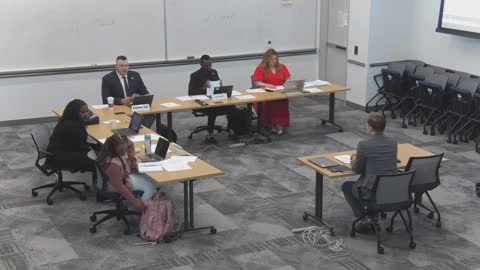
A revised framework for State Board of Education guidance on local school‑board development cleared the Committee on Civil Initiatives on Thursday after a contentious debate about process and public notice.
Member Paul Hall moved to adopt the substitute framework and the motion initially failed on a roll call vote; the committee then voted to reconsider and later approved the framework after additional discussion and an amended process for consideration.
Why it matters: the framework guides the State Board’s expectations for training and continuing education offered to local trustees. Several members said the substitute narrows training focus toward oversight and statutory compliance; others said it removed sections on advocacy and engagement and was circulated without adequate public notice to local trustees.
What happened in committee - Substitute and posting: Member Hall described the substitute framework as an effort to modernize and narrow the State Board’s training guidance, focusing on trustee oversight, student outcomes and legal compliance. He said the 2020 framework needed updating after stakeholder feedback and high‑profile governance failures highlighted gaps in local trustee oversight. - Process objections: multiple members, including Dr. Clark and Ms. Charles, objected to how the substitute reached the agenda and said the public and many trustees had little opportunity to review or comment. Dr. Clark said the item had not been made visible in the same way as typical rulemaking public comments; staff clarified the framework is not a Texas Administrative Code rule and therefore does not follow the TAC public comment posting process. - Roll call and reconsideration: an initial roll call vote failed (three votes against, two in favor). A motion to reconsider the vote passed. After further discussion the committee passed the framework (final vote counts recorded as three in favor, two opposed in the committee). The committee chair said staff had provided the document on the agency website following the April committee meeting, though staff later acknowledged they would confirm exactly where it was posted. - Substantive tensions: opponents warned the substitute removes “advocacy and engagement” language and argued trustee engagement and community relations are vital governance functions; supporters said the revised text better aligns training with statutory limits and reduces ambiguity that could expose trustees to legal risk.
Board and staff comments Steve Leshlow, TEA’s deputy commissioner for governance, told the committee the framework is not part of administrative rulemaking and therefore does not go through the same TAC posting/comment steps as rule proposals. He said the framework had been posted after the April committee meeting but could not immediately confirm which site section included it; he agreed to report back to the committee on where the document appeared online.
Several members urged a formal outreach process to local trustees and suggested the committee work to define which elements of continuing education should be mandatory and which should be advisory. Member Pickett, who supported the substitute, said several districts had raised concerns about trustee conduct that this framework aims to address.
Formal actions recorded - Motion to adopt substitute framework (initial vote): failed on roll call; tally recorded in transcript as 2 yes, 3 no (committee roll call included named votes: Member Hall — yes; Member Pickard — no; Member Childs — no; Member Clark — no; one recorded yes vote was on the record but not audibly ascribed to a name in the transcript). The committee then voted to reconsider. - Motion to reconsider: motion to reconsider the failed vote carried; the vote to adopt the framework was then taken and carried by committee (final committee tally reported as 3 yes, 2 no). The committee chair announced the motion carried and referred further action to the committee of the full board as appropriate.
What the framework does and next steps The substitute framework narrows training emphasis to governance, legal compliance and student outcomes and removes or replaces previous language characterized in debate as broadly permitting advocacy and engagement topics in continuing education. Supporters said the tighter language reduces ambiguity about trustees’ authority; opponents said it reduces guidance on engagement strategies trustees use to connect with communities.
Staff said the framework and committee discussion will be part of the State Board’s forthcoming agendas; members asked staff to confirm where the substitute had been posted after the April meeting and to outline options for additional outreach to local trustees.
Speakers quoted in this story are taken from the committee transcript and appear in the attribution list below.