
Committee begins broad review of "innovative courses" rule, weighing tighter guardrails and sunset timing
Get AI-powered insights, summaries, and transcripts
Subscribe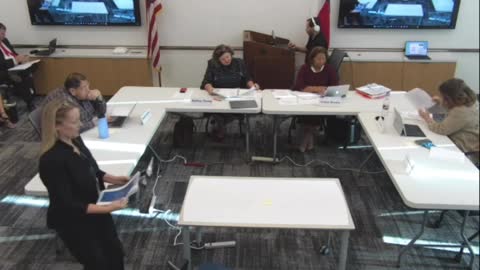
Summary
Staff briefed the Committee on Instruction on the four-year review of 19 TAC chapter 74 and the role of innovative courses. The committee discussed the three pathways that make courses available (TEKS-based, innovative, local), counts of existing courses, sunset criteria, instructional-materials review and whether to pause renewals while rules are
The Committee on Instruction opened a discussion on the four-year review of 19 TAC chapter 74 (curriculum requirements and graduation rules), focusing especially on the “innovative courses” pathway and whether the committee should tighten application criteria, revise sunset timing and add clearer review standards for instructional materials.
Shannon Trejo, deputy commissioner for the Office of School Programs, outlined three ways a course can become available to students in Texas: a TEKS-based course created through the State Board of Education TEKS review process, an innovative course approved under 19 TAC §74.27 that grants state elective credit with an expiration date, and a locally approved course that grants local credit but not state graduation credit. Trejo said TEKS-based course development can take about a year, innovative courses are considered annually under the committee’s rule, and local courses are under district authority.
Staff provided several data points: about 260 TEKS-based courses award elective credit; 145 approved innovative courses exist statewide; 88 of the innovative courses are CTE-related; 15 innovative CTE courses are in progress to move into the TEKS process; and 113 of the 145 innovative courses meet at least one of the chapter 74 criteria for sunset consideration in 2026. Trejo added that 12 courses expire in 2025–26 and 26 expire in 2026–27. The application window for innovative courses was open with submissions due the following day; staff reported two renewal submissions had been received so far and said there may be up to 12 renewals pending review.
Committee members pressed staff on the purpose of the innovative-course pathway and whether it should expand state elective credit options or instead be narrowed. Several members argued the committee should “clean up” the list, remove courses that are duplicative or not truly innovative, and consider moving appropriate courses into the TEKS process rather than retaining them indefinitely in the innovative category. Member Brooks said she opposed expanding the number of innovative courses that award state elective credit, arguing the state should focus on foundational education rather than act as a vocational-training gatekeeper; other members said the pathway can be useful for specialized student populations (for example, specialized special-education needs) and for piloting novel curriculum before TEKS adoption.
The committee discussed the current sunset criteria in 19 TAC §74.27(a)(9): courses must have been approved at least three years and may be considered for sunset if they have zero enrollment for two years, an average enrollment of fewer than 100 students statewide over three years, an average of fewer than 20 districts/charters with enrollment over three years, or if the course is duplicative of another innovative or an approved TEKS-based course and has been approved for implementation as a TEKS-based course. Staff asked whether the committee wanted to change the timing of sunsets (currently every two years), clarify criteria by course type (for example, CTE courses not in a program of study), or require new gateway criteria at initial application (such as limiting applicants to specialized student populations or requiring demonstrable distinctiveness from existing TEKS-based and innovative courses).
Members also flagged instructional materials oversight. Staff confirmed instructional materials must now be filed with applications after the 2023–24 revisions, but committee members asked whether the committee should add standards or a materials-review process for innovative-course materials similar to the IMR/IMRA process for TEKS-based instructional materials. Pam (staff) and other members noted a full materials-review regime would be labor-intensive and might not be appropriate for all innovative courses; they proposed distinguishing which courses should receive more rigorous materials review based on content and potential scale.
On next steps, staff agreed to provide additional data and drafts: (1) a list of which innovative courses are in program-of-study pathways or otherwise good candidates for TEKS consideration; (2) the list of courses currently up for renewal and their renewal status; and (3) draft rule language options to bring back at a future meeting (members requested draft language for the November meeting). Staff said they would check with legal about the possibility of granting one-year administrative extensions for renewals while rules are revised. No formal action was taken; the item remained a committee discussion.