
Board previews five CTE course proposals including occupational safety and EMT basics; TEA to refine implementation details
Get AI-powered insights, summaries, and transcripts
Subscribe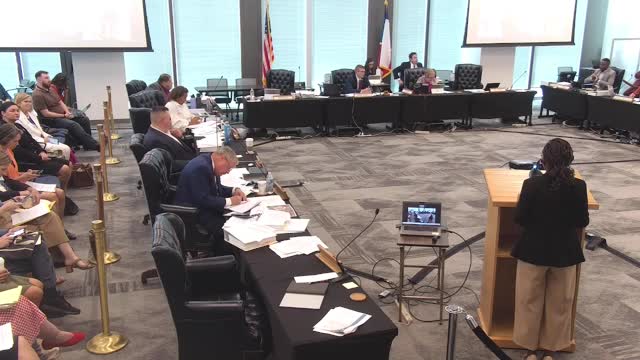
Summary
The State Board reviewed five CTE course proposals developed under interagency contracts, including an occupational safety course and four emergency‑services/fire‑science courses, and asked staff to map credentialing and program‑of‑study placement before first reading in November.
The State Board previewed five career‑technical education (CTE) course proposals developed under interagency contracts and discussed implementation details and where the courses should be placed in the program‑of‑study structure.
What the board reviewed
- Occupational Safety and Compliance: drafted under contract with Texas State Technical College. TEA staff suggested treating that course as a "safety lab" intended to be paired with an occupation‑specific course (for example, combined with a welding or oil‑field course) rather than offering it only as a free‑standing semester for all students.
- Four emergency‑services/fire‑science courses: drafted through a Collin College contract. The set includes "foundations/fundamentals of fire protection," "crisis care and disaster response," "emergency medical technician (EMT) basic," and a fundamentals course for fire protection. TEA staff proposed renaming "fundamentals" to "foundations" to align with existing naming conventions.
Why it matters: course placement and credentialing
Board members asked where the EMT basic course sits in existing programs of study. TEA staff said EMT basic is currently located with fire science program(s) but noted it also maps to health‑science career pathways used for diagnostic and therapeutic services. The agency will review whether an emergency‑services program of study should be created to accommodate EMT and allied first‑responder pathways.
Members also asked whether these courses create an industry credential on completion. TEA staff said completing the course alone does not automatically issue an OSHA or EMT credential; the agency will check whether the course content aligns with existing industry training (for example, OSHA‑10 or OSHA‑30 for safety) and will return with a recommendation on whether pathway alignment can produce an industry credential or a card and what additional requirements would be needed.
Procurement and contract notes
TEA staff confirmed the five courses came from the interagency contracts the board authorized earlier in the year and that the contracts concluded Aug. 31; the board has seen the courses in batches as writers completed work. Staff offered to invite subject‑matter experts who helped draft the courses to present at first reading if board members want direct access to the writers.
Next steps
Staff will: - Continue technical work and bring any edits (for example, a title change to "Foundations of Fire Protection") to the board at first reading in November. - Investigate whether course content fully meets industry training requirements (OSHA, EMT) and can reasonably map to verified credentials or training cards. - Consider whether the occupational safety course should be adopted as a paired safety lab and return language for first reading if board direction favors that approach.
Ending note: The CTE proposals are at discussion stage; TEA staff said they will return with specific drafting language and credential alignment at the board’s November meeting so the courses can be considered for first reading and filing authorization.