
Committee recommends MAPS innovative course approval contingent on removal of website links
Get AI-powered insights, summaries, and transcripts
Subscribe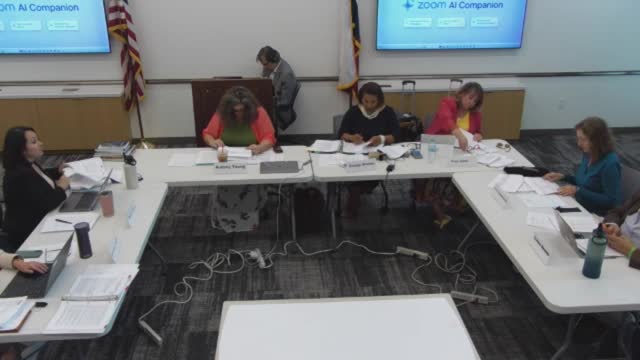
Summary
The State Board of Education Committee on Instruction recommended approval of the MAPS innovative high-school elective on condition that the course author remove website links from recommended materials; the committee cited concerns about student access to external web content and data collection.
The State Board of Education Committee on Instruction on June 19 recommended that the full board approve the MAPS innovative course contingent on the course author removing website links from the materials the committee had flagged.
The committee prioritized student protection and material suitability when discussing the MAPS (Measurable Academic and Personal Success) course, which staff told members recorded 15,346 student enrollments in 2024–25 and was offered by 104 districts. Monica (TEA staff) explained that TEA reviewed recommended resources and flagged external websites for potential issues, such as social links and third‑party content.
Committee members and invited staff endorsed a pragmatic fix: remove or deactivate external URLs in the course resources prior to the full-board vote. “Perhaps we can remove the links and consider textbooks or other recommended materials,” a committee member said during discussion. Member Pam Little moved that the committee recommend approval of the MAPS course contingent on removal of websites; Gustavo Revelas seconded. The motion passed with no objection.
Why it matters: committee members said their chief concern was students encountering unvetted third‑party content or advertisements after following links during school hours. TEA staff noted that some recommended resources were federal or state agency sites (for example, a Texas Workforce Commission page), but that any third‑party site may surface unrelated content.
Supporting details: TEA staff provided the committee with a side‑by‑side comparison of current and proposed course language, a review of recommended materials, and a list of specific citations where materials raised flags. The staff review followed the agency’s suitability criteria and identified instances where social media functionality (for example, “like” buttons) appears on resource pages. TEA told the committee it would contact the course author immediately after the meeting to request removal and report back before the board’s next vote.
The committee treated removal of links as a condition of its recommendation rather than as a prohibition on non‑digital resources; staff noted that where a resource is a government site or a hardcopy textbook, risks differ. The committee discussion also acknowledged that district network filters exist, but members said filters do not fully address students’ ability to reach external content.
The full board will see the course at its next meeting; TEA staff said they will inform members whether the author removed the flagged links before the vote.