
TEA outlines Generation 31 open‑enrollment charter cycle, adds virtual/hybrid campus option
Get AI-powered insights, summaries, and transcripts
Subscribe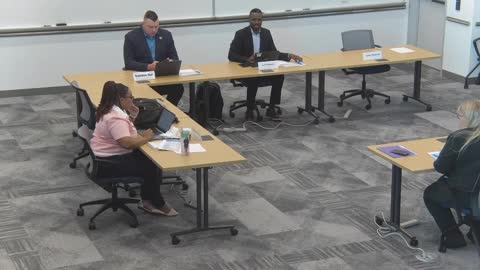
Summary
The Texas Education Agency updated the State Board on Generation 31 open‑enrollment charter applications, including timelines, support sessions and a new addendum allowing full‑time virtual or hybrid charter campuses under a state law change.
TEA Deputy Associate Commissioner Mary Ann Shetty briefed the State Board of Education on the Generation 31 open‑enrollment charter application cycle and the parallel high‑performing‑entity (HPE) process, including a new addendum for full‑time virtual and hybrid campuses.
"Our item today is an update on the generation 31 charter open enrollment charter school application process," Shetty said, describing the agency's goals and deadlines.
The update mattered because the agency is responsible for vetting and recommending new open‑enrollment charters to the board. Shetty said the standard application was published in mid‑August and that the "standard application due date is November 14." She outlined a multi‑stage review: completeness/eligibility review, external review, capacity interviews in mid‑to‑late April (when the no‑contact period ends), and the commissioner's recommended charter notices to the board in May for June deliberation.
TEA described several applicant supports: mandatory information sessions in August (held Aug. 19 and Aug. 26), optional support seminars through September–November that covered governance, community engagement and financial plans, monthly office hours for applicant questions, and a final pre‑submission session the week before Nov. 14. Shetty said 97 people attended the mandatory August sessions, an increase from last year.
The agency also described a separate HPE timeline for operators with prior high performance. For applicants seeking approval to open in August 2026 under the HPE strand, the due date is Oct. 10 for January board consideration; other HPE timelines have an application due date of Nov. 21 for later approval cycles. Shetty explained that the HPE review relies in part on operating data from other states and a due‑diligence site‑visit stage before the commissioner recommends candidates to the board.
Shetty and board members addressed how recent state law changes affect authorization. Shetty said Senate Bill 569 allows charter and district LEAs to seek authorization to operate full‑time virtual and hybrid campuses and that TEA added an addendum this year to permit applicants to propose 100% virtual campuses. "We included an addendum for entities who want to propose a full time virtual or a hybrid campus," she said, and added that an applicant need not show an identified facility at the time of application but must describe its facilities plan.
Board members asked how community outreach and staffing expectations are scored; Shetty said external reviewers score applications on community need and engagement and that the agency's special populations office reviews staffing and coherence with budgets.
The update was informational; no board vote was recorded. TEA said it will notify applicants of eligibility to move forward to external review after the Nov. 14 submission deadline and that capacity interviews are typically held in early May.
Looking ahead, applicants and interested operators should note the Nov. 14 standard application deadline and the Oct. 10 and Nov. 21 HPE deadlines depending on the opening timeline. TEA staff said they will continue optional seminars and monthly office hours through the submission windows.
Sources: Presentation and Q&A with Mary Ann Shetty and TEA staff during the State Board of Education meeting.