
City Schools of Decatur highlights gains, renews focus on closing achievement gaps
Get AI-powered insights, summaries, and transcripts
Sign Up Free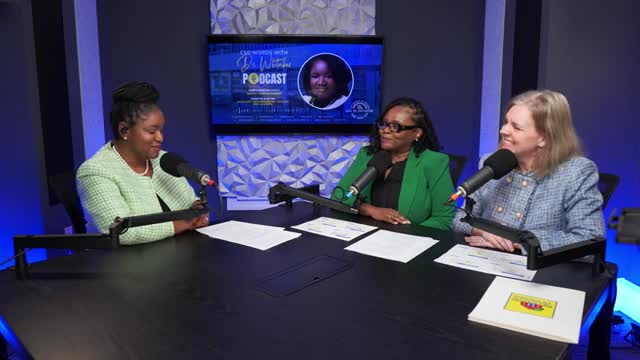
Summary
Superintendent Dr. Whitaker and senior leaders reviewed the district's All in Decatur strategic plan, presented recent proficiency gains and outlined priorities for the 2024'25 school year including standards-aligned instruction, data-driven PLCs, OneGoal support and literacy initiatives.
Dr. Whitaker, superintendent of City Schools of Decatur, said the district's strategic plan, All in Decatur, remains the foundation for the year and that leaders will prioritize student academic success, future readiness, continuing the capital campaign and safety enhancements.
The district released longitudinal test results and program updates on its Words with Dr. Whitaker podcast, where Deputy Superintendent Karen Newton Scott and Assistant Superintendent Jennifer Burton described academic gains and next steps. "In CSD, the strategic plan was unveiled in March 2023, and it was called All in Decatur," Dr. Whitaker said, framing the discussion around the plan's first strategic accelerator: "student success in all areas."
Why it matters: district leaders tied recent test-score improvements to coordinated instructional changes and new supports aimed at narrowing longstanding gaps, especially for Black students. Karen Newton Scott said the district has seen "tremendous growth" in some subgroups but acknowledged the work is not finished.
Key findings and initiatives
- Test-score trends: Jennifer Burton, assistant superintendent for teaching and learning, described both cohort tracking and year-to-year comparisons. Using the district's cohort analysis, Burton said an example group that was 69% proficient in fourth grade (2019) reached 75% proficiency by 2024. Karen Newton Scott highlighted gains among Black eighth-grade students, saying proficiency on the end-of-grade math assessment rose from 16% in 2019 to 47% in 2025.
- Assessment and instruction: Burton emphasized using assessments to drive instruction: "we use that assessment data to drive instruction" and said leaders are expanding professional learning communities (PLCs) so teachers and schools can dig into data and adjust instruction.
- Standards and course placement: The district implemented new math standards in 2024 and aligned classroom materials to those standards. Burton noted a shift that made Algebra I (high school credit) widely available as an option in eighth grade, with roughly half of eighth graders taking the course.
- Literacy and early learning: Burton said the district is rolling out science-of-reading-aligned ELA standards and materials, and that pandemic-era disruptions contributed to continued deficits in early reading for some cohorts. "It's really important in those early years that students are looking at their own mouth," Burton said, explaining why mask use during early grades affected phonemic and mouth-shape instruction.
- Targeted supports: Karen Newton Scott described OneGoal, a program begun in 2024'25 to support middle students who are not failing but not yet scoring at higher proficiency levels: "OneGoal ... supports students in the middle ... finding their just right fit." The program aims to help students identify postsecondary options and social supports, not only academic outcomes.
How the district plans to act
Leaders said they will continue systemwide coaching cycles and regular observations with specific feedback tied to instructional priorities. Newton Scott and Burton said principals will take a more active role in explaining and modeling instructional priorities at each school, supported by district tools, interoperable data systems and coaching for school leaders.
What officials did not decide or quantify
No board votes or policy enactments were recorded during the podcast; the session was an update and discussion of strategy and data. Districtwide enrollment figures, detailed budget amounts for the initiatives and implementation timelines for every program mentioned were not specified on the podcast.
Ending
District leaders framed the improvements as progress, not completion. Newton Scott said the gains "excite me" but reiterated that more work is required to close remaining gaps. Burton said families and staff should expect the same nurturing environment and a higher degree of clarity about where students are academically and what supports follow.