Get Full Government Meeting Transcripts, Videos, & Alerts Forever!
Get email alerts on the K 12 Education Student Achievement topic
No spam. Unsubscribe anytime.
Carroll County reports reading and graduation gains after targeted interventions
Summary
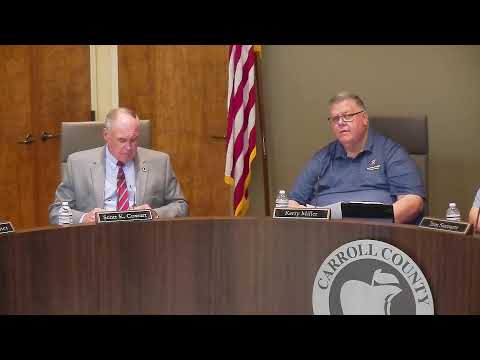
At an Aug. 18 Carroll County Board of Education work session, district leaders and principals credited expanded phonics, the science-of-reading rollout, oral reading fluency practice, and extended learning time with measurable gains in reading and postsecondary readiness across elementary, middle and high schools.
At a work session on Aug. 18, Carroll County educators presented districtwide gains in literacy and postsecondary readiness following targeted instructional changes and expanded student supports.
Dr. Jess Gainsworth, speaking for elementary principals, said the district’s year-two rollout of the science of reading has focused time for students who struggle on “differentiated phonics” and extended learning time. “This time is set aside for our extended learning time,” Dr. Gainsworth said. “We are giving those students exactly what they need.”
The middle school presentation credited an oral reading fluency program and an “engagement cycle” with improved outcomes. “When students see growth, they believe that the work that they’re doing and then they try even greater and even harder,” said Mr. Long, the middle school presenter. The presentation reported middle‑school gains including a GMAT increase of as much as 10 percent, a rise in CCRPI from 67.6 percent to 83.62 percent, and improvement in one school’s closing‑the‑gap measure (reported as moving from 38.3 in 2023 to 43.3 in 2024 and to 95 percent in the current year).
Jeff Bryant, identified as a principal representing high schools, said high schools emphasized “innovation and advanced opportunities,” including a local “G Plus” preparedness metric. Bryant reported the first year of measuring G Plus raised the proportion meeting the metric from a pre‑G Plus baseline of 59 percent to 70 percent in the first year of measurement. He said county high schools expanded extended learning time (ELT) to support end‑of‑course tests, AP, and CTAE pathway assessments; pathway assessments increased to 84 percent countywide versus a reported state average of 59 percent. Board materials noted the district’s students took “over 1,740 college level classes last year,” and AP Scholar recognition rose from 107 to 145 students. Bryant said the district increased the number of college‑level classes taken countywide by 327 in one year.
Board members praised cross‑school collaboration and the use of master teachers to support educators new to grade levels or subject areas. A board member asked for counts of certified, first‑year teachers by level (elementary, middle, high); a district representative said those numbers would be provided (not specified at the meeting).
The board approved placing the student‑achievement presentations on the consent agenda for the next business meeting by general assent.
Less‑central details noted in the presentations included: differentiated phonics and spiraled instruction in ELA and math at elementary grades 3–5; middle‑school oral reading fluency and engagement cycles; and high‑school increases in AP and dual‑enrollment offerings.