
Plain City staff outline stormwater utility proposal, estimate $166,000 annual revenue at $5 ERU
Get AI-powered insights, summaries, and transcripts
Subscribe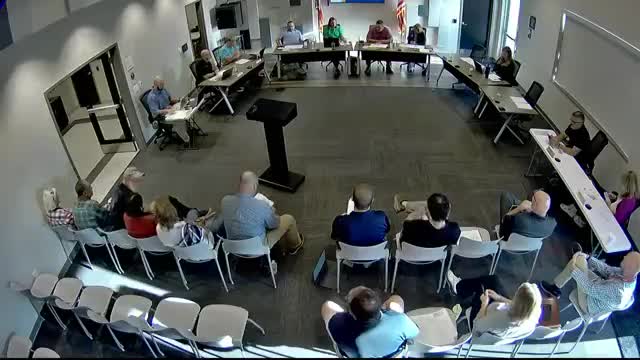
Summary
Staff presented a proposed stormwater utility that would charge for impervious area using an Equivalent Residential Unit (ERU). At a sample $5-per-month ERU, staff estimates roughly $166,000 in annual revenue and said the fee would seed but not fully fund more than $4 million in identified stormwater costs.
Plain City staff presented a proposed stormwater utility for the village, describing a rate structure based on impervious area and an Equivalent Residential Unit (ERU). The presentation recommended finalizing the rate and legislation and returning to council for readings; staff said billing setup would follow and that quarterly billing tied to existing refuse billing is under consideration.
The staff presenter said the ERU used in the village analysis equals 2,650 square feet of impervious area and that multifamily, commercial and institutional properties would be billed based on their measured impervious surface. Using a $5-per-month ERU as an illustrative example, the presenter said, “If $5 a month, a single family resident would pay $5 a month,” and that the village-wide estimate at that rate would generate about $166,000 annually.
Nut graf: The proposal would create a dedicated local funding source for routine storm sewer maintenance, equipment and capital repairs while aiming to provide an accountable, flexible and equitable fee structure based on contributors’ impervious surface. Staff and council framed the revenue as seed money for larger capital projects rather than full funding for multimillion-dollar projects.
Staff said the village has identified several capital projects with stormwater components that collectively exceed $4 million; they emphasized that the new fee would not cover all costs but could fund maintenance and partial capital work. The presenter listed examples of eligible uses: manpower, equipment, pipe, erosion-control materials and a repair fund for sinkholes caused by subsurface stormwater problems.
The presentation included sample math for commercial parcels (showing ERU multipliers for acreages) and a community inventory: the presenter reported roughly 1,525 single-family ERUs, 955 commercial ERUs and 290 multifamily ERUs in the village and explained how those groupings translate to revenue under the illustrative $5 rate. Staff also said the ERU sizing and ERU counts were run against 2024 aerial/GIS data and rounded to reflect recent development.
Council members focused their questions on the rate level and escalation mechanism. One council member said the content of the presentation had not changed their view and that “figuring out the number is really the only thing we still had hanging.” Another member urged a stepped approach to implementation and suggested automatic escalators for a limited number of years, similar to prior water and sewer increases; a third council member said a phased increase (for example, start lower and escalate toward the midrange over three years) could soften sticker shock for residents.
Staff outlined next steps: finalize the recommended rate, prepare draft legislation (packets already include draft language, staff said), determine a billing cadence and then bring the ordinance for first reading. The presenter told council the first reading could be scheduled as soon as Monday and that communications work — mailers, website FAQs and an informational flyer describing examples of funded projects — should begin once the legislative details are final.
Ending: Council members asked for comparative data from other communities; the presenter said many peer governments use ERUs between $5 and $10 and offered to provide a comparative table. Council did not vote on rates at the meeting and directed staff to prepare the formal ordinance, billing plan and outreach materials for upcoming readings.