
Wilsonville unveils draft Natural Area Management Plan to address invasive species, wildfire risk and habitat restoration
Get AI-powered insights, summaries, and transcripts
Subscribe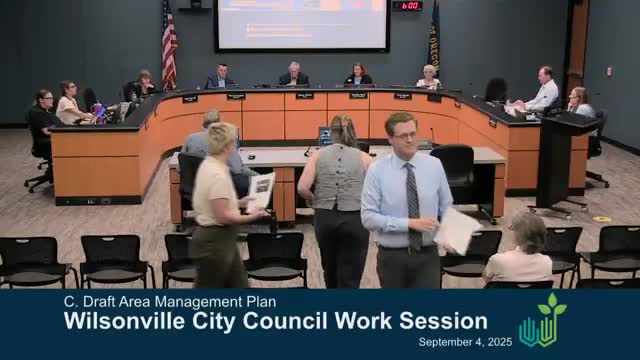
Summary
The city presented a draft plan designating 14 priority natural areas, habitat-condition scores, community engagement results and management objectives that include wildfire risk reduction, invasive‑species control, and proactive pest response; staff outlined funding sources and a suggested prioritization approach.
Natural resources staff and consultants from Ash Creek Forest Management presented a draft Natural Area Management Plan to the City Council on Sept. 4, outlining inventory methods, habitat assessments, community engagement and prioritized management objectives.
Manager Carrie Rapold and Ash Creek ecologists said they cataloged city-owned tax lots, then narrowed the inventory to 14 priority natural areas larger than 0.5 acre with relatively intact native habitat. Consultants conducted vegetative surveys, habitat delineations and canopy assessments to classify parcels as good, fair or poor habitat condition; that scoring is intended to steer restoration efforts toward areas with higher return on investment.
Public engagement included an online survey (16 responses in an early survey, then 178 responses after a citywide mailing), an open house, Earth Day events and stakeholder outreach. Respondents consistently cited wildfire risk, invasive species and unmanaged recreation as central concerns; survey feedback also highlighted interest in more trails and pollinator habitat. Rapold said the city will continue community outreach and wants to educate neighbors about staged restoration work and signage for in-progress projects.
The plan lists six management objectives: enhance ecological processes and native vegetation, control invasive and noxious weeds, improve ecosystem resilience to climate change, reduce wildfire risk and ladder fuels, proactively manage emerging pests (for example Mediterranean oak borer and emerald ash borer) and provide safe, accessible recreation and stewardship opportunities. Habitat-specific strategies are included (riparian vs. upland vs. oak savanna actions) and consultants provided unit cost estimates for site preparation, ladder‑fuel removal, planting and maintenance broken out by habitat quality.
Rapold said potential funding sources include the Oregon Watershed Enhancement Board (OWEB), Oregon Department of Fish and Wildlife, Metro grants, the Oregon Invasive Species Council and private foundations; she also reported initial work to explore a watershed-council structure to strengthen grant competitiveness.
Ending: Councilors praised the inventory and urged the city to press Metro and other partners to address adjacent properties (for example Grand Oaks Park) where unmanaged vegetation increases wildfire risk to nearby homes. Staff said they will use the plan to prioritize operational budgets and grant applications and to improve public communications about restoration timelines and methods.