
New Iberia fire chief outlines use of new public safety tax, truck rehab plan and new state screening requirement
Get AI-powered insights, summaries, and transcripts
Subscribe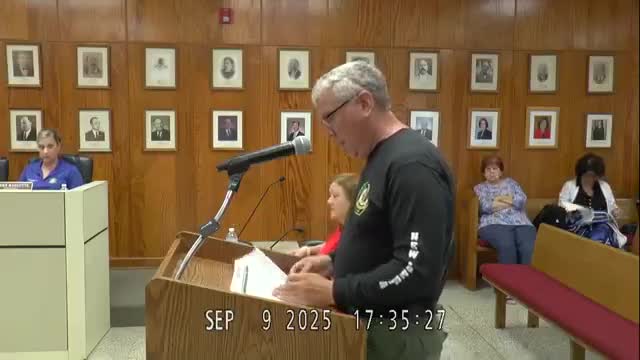
Summary
Fire officials told council they are beginning to collect a quarter‑cent public safety tax, will study refurbishing two trucks instead of buying one new $500,000 ladder truck, and must implement a new state law requiring initial cancer screenings for firefighters.
The New Iberia Fire Department is starting to use revenue from a newly implemented quarter‑cent public safety tax and is proposing to explore refurbishing two existing engines instead of buying one new apparatus, officials told the City Council during the budget review.
Fire Chief told the council the quarter‑cent sales tax businesses began collecting July 1 and the city received its first payments in September. "We're starting to collect the revenue," the chief said, and the budget reflects that new income.
On apparatus, the chief noted a $500,000 line in the budget for fire trucks and suggested researching whether two older trucks could be reconditioned for roughly $250,000 each instead of purchasing a single new truck. "You can send two of your existing trucks for about a quarter of a million dollars each...you basically get a new truck back," he said, and argued refurbishment could extend service life for 25‑year vehicles.
Councilors asked about pay supplements and benefits. The chief clarified how state supplemental pay works: after the first year of employment, the state pays $600 per month to firefighters who hold the Firefighter I certificate; the city covers that $600 during the first year and then discontinues its supplement when the state payment begins.
The chief also discussed federal CARES Act carryover funds the department still holds and said the department is budgeting a $50,000 carryover because of an anticipated, but as‑yet‑unknown, cost tied to a new state requirement. "The state of Louisiana passed what they call Act 554 which requires for all fire departments in the state to provide an initial cancer screening...we're trying to work with Iberia Medical and one of their physicians to do it," the chief said. He described work to identify screening costs, including outreach to retired personnel who must be notified for the initial screening.
Discussion only: council heard options for truck procurement vs. refurbishment and for using new sales tax revenue to fund raises and equipment. Direction/next steps: staff will research truck rehabilitation costs, finalize arrangements for state screening implementation and report back with cost estimates and any recommended budget amendments. No binding procurement decision or final contract award was made at the meeting.