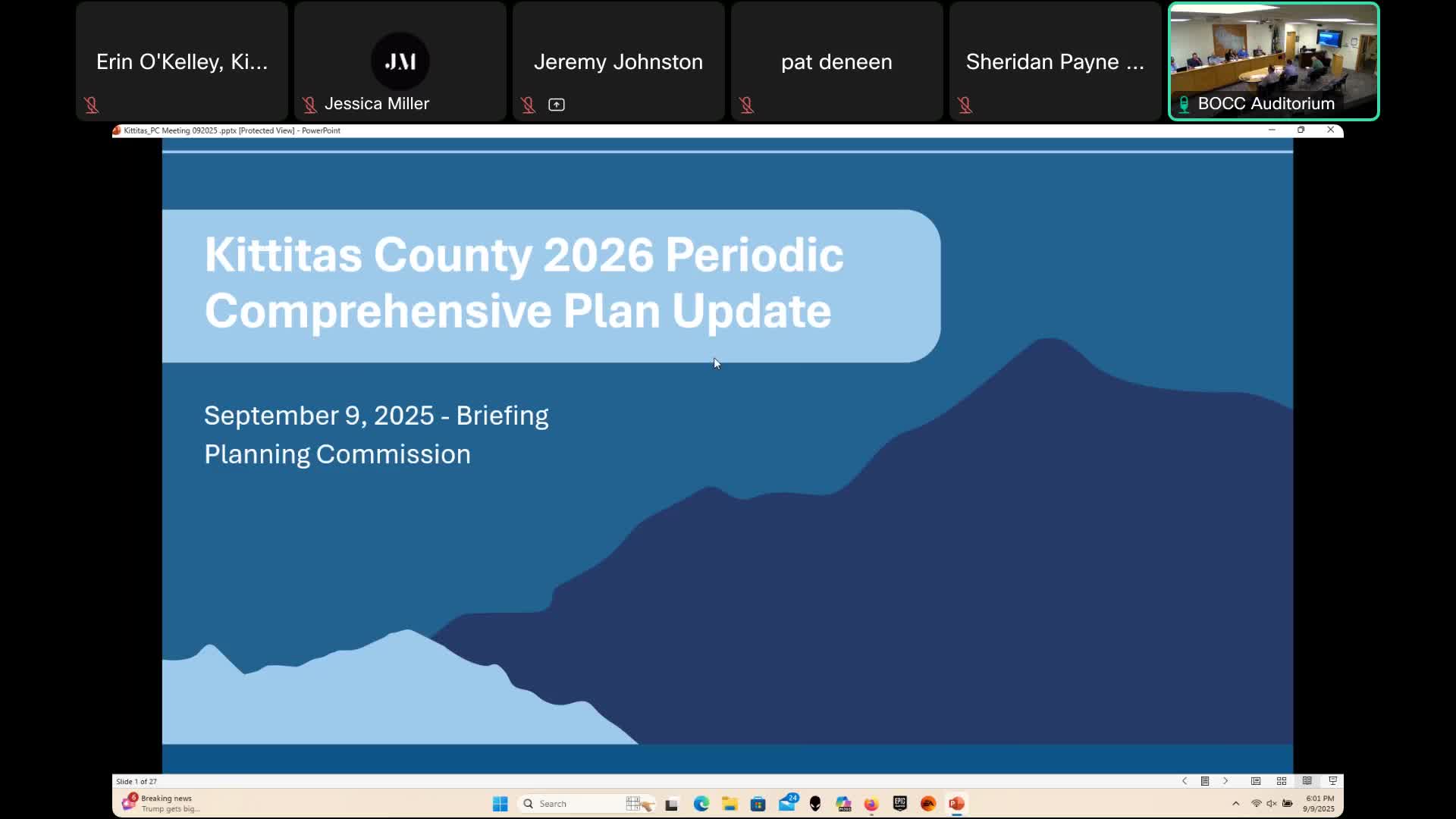
Planning commission opens 30-day comment on draft land-use, housing and rural-resource policies
Summary
Kittitas County staff and consultants released preliminary draft policies for the comprehensive plan and opened a 30‑day public comment period covering land use, housing and rural resources; transportation and other elements will follow in coming months.
Kittitas County planning staff and their consultant opened a 30‑day public comment period on preliminary draft policies for the county comprehensive plan, focusing initially on land use, housing and rural‑resource elements.
The county’s community and economic services director, Chad Baylor, said the materials are “just to drive a discussion” and stressed the drafts are intended to elicit questions and feedback from planning commissioners and the public. “We are going out for a 30 day comment period for these September items,” Baylor said.
The drafts are not a complete comprehensive plan, the consultant leading the effort said. Clay White, a planning consultant with Warren, told commissioners the staff broke the work into monthly topics so commissioners and the public can review manageable sections before the county issues a full draft this winter. “This is the first of three months in a row of the work,” White said. He said the process will include a later joint meeting with the Board of County Commissioners so both bodies remain aligned.
Why it matters: the county must update its comprehensive plan under state planning rules and intends the update to guide 20 years of choices about housing, jobs, transportation and capital facilities. County staff said they want policies written to be implementable (not just aspirational) and tied to an implementation plan that spells out responsible departments, costs and timelines.
What was discussed: commissioners and staff discussed the project schedule and outreach strategy; the initial packet includes tables showing current policy text, proposed changes, and a column explaining the reason for each change. White and county staff said planned monthly topics are: - This month: land use, rural resources and housing (30‑day comment window). - Next month: transportation, capital facilities and utilities. - November: environment, parks and open space, climate resilience and economic development.
Staff noted some policy changes reflect state law updates and efforts to make policies implementable; other changes are consolidation or cleanup of existing policy language. White said the county will incorporate background studies and a full draft plan this winter so the public will have a complete document to review.
Engagement and next steps: staff described a mix of outreach methods, including the project website, pop‑up events, one‑on‑one meetings with stakeholder groups (tribes, farmers, builders and nonprofits), and targeted meetings in Upper County communities. Baylor and White asked commissioners to send written suggestions and noted staff will track and summarize comments into the draft plan. Commissioners also discussed possibly adding a second monthly meeting to keep the schedule.
No formal decisions were recorded during the meeting; staff presented the schedule and asked for commissioner feedback.
Ending: Staff said they will collect public comments during the 30‑day window, continue targeted outreach, release a fuller draft later this winter, and return to the commission for formal review and recommendation to the Board of County Commissioners.