Get Full Government Meeting Transcripts, Videos, & Alerts Forever!
Get email alerts on the Wastewater Budget topic
No spam. Unsubscribe anytime.
Hamilton wastewater utility proposes smaller operating budget, $12.4 million in capital for 2025
Summary
The Hamilton Department of Water Pollution Control told council it plans a $24.8 million operating budget and $12.4 million in capital for 2025, citing aging equipment, staffing shortages and an urgent $5 million force‑main rehabilitation.
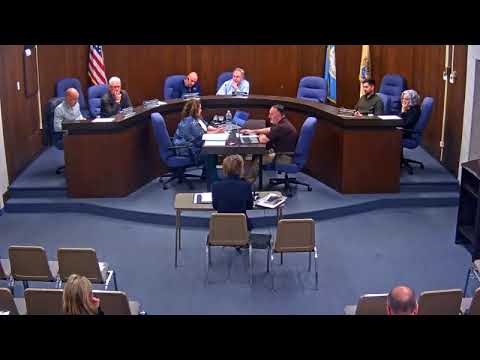
Carrie, speaking for the Hamilton Department of Water Pollution Control, presented the utility's 2025 budget to the Hamilton Township Council and outlined capital priorities she said are needed to protect public health and the environment.
The department proposed total operating expenses of $24,800,000 and capital projects totaling $12,400,000 for 2025. Carrie told the council the utility processes roughly 7,100,000 gallons per day of wastewater and serves “over a 100,000 residents between Hamilton and Robbinsville.” She warned that many parts of the plant are more than 85 years old and that staffing shortages and aging infrastructure are the department’s top challenges.
The budget presentation singled out two near-term priorities. First, the department is replacing aging rotating biological contactors (RBCs) that perform a core step of the plant’s biological treatment. Carrie said the plant has 48 RBCs; six were replaced in 2024 and the remaining units are slated to be replaced over the next six years. She told the council, “It’s a lot of money, but it is the heart of our biological treatment process.” Individual RBCs were described in the presentation at about $300,000 each.
Second, the administration and department identified an almost‑emergency capital need: rehabilitation or replacement of the Yardenville–Groveville force main, which Carrie said carries flow from a pump station back to the plant. That single project was estimated at about $5,000,000 and was described in the presentation as “almost an emergency project” that must move forward.
Carrie said the department hopes to finish a master plan and begin incorporating its recommendations into the capital program by the end of the year. She also noted an equipment purchase intended to cut operating costs: the utility bought a roll‑off truck to haul sludge to the landfill in house; she estimated the payback at about a year and a half and said outside hauling costs for a container have risen “from $350” previously to roughly $1,000 per box in recent bids.
On staffing, the department asked to maintain a projected headcount of 68 full‑time positions for 2025. Council members pressed for clarification about current vacancies and training. Carrie said staffing shortages were worsening because licensed operators are retiring nationwide faster than they can be replaced and because the plant’s engineers had experienced turnover; she described internal capacity constraints that have slowed delivery of some capital work and said the department is using outside design and construction contracting where appropriate.
Council members asked about financing options. Carrie described discussions with the New Jersey Infrastructure Bank (iBank) and said iBank financing can make projects less expensive — in some cases by providing interest‑free portions of loans — but that the iBank process is technical and requires project approvals. She also said doing more indoor work or consolidating projects could reduce the need for lengthy environmental studies and simplify some grant and loan requirements.
The department said it is monitoring potential New Jersey Department of Environmental Protection regulations that would require significant reductions in ammonia and PFOS in effluent. Carrie said the utility continues planning, design and construction work to bolster aging systems in the plant and the collection system.
The council did not take formal action during the presentation; the administration and finance staff will continue to refine the budget and capital plan as the master plan is completed and as financing options are resolved.
Ending
Carrie concluded by thanking WPC staff for round‑the‑clock response to emergencies and answered council questions about connection fee revenue (about $830,000 in 2024) and the multi‑year RBC replacement plan. The administration and council acknowledged the force‑main project as a near‑term priority and said it will be considered in the town’s capital planning and financing discussions.