
Committee acknowledges public health report on streamlining food business permits; pilot steps planned
Get AI-powered insights, summaries, and transcripts
Subscribe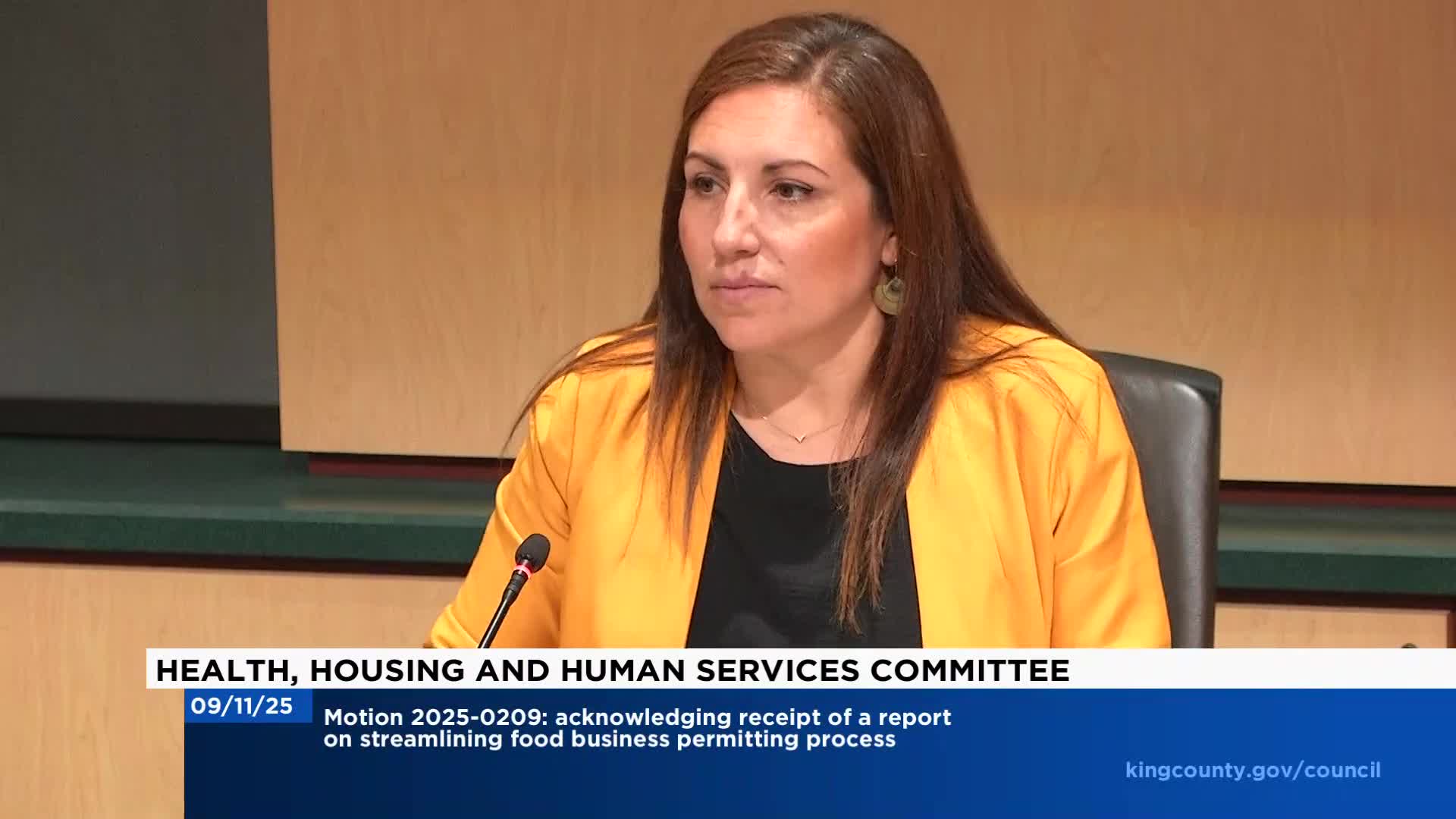
Summary
King County public health staff reported on a proviso‑mandated review of food business permitting and described a package of outreach, subsidized kitchen access, fee reductions and code review workgroups aimed at easing entry for small food vendors while protecting food safety.
King County public health officials briefed the Health, Housing and Human Services Committee on Sept. 11 about a report required by a 2025 budget proviso that examined ways to streamline permitting for food businesses. The committee acknowledged receipt of the report and recommended sending the item to full council.
Environmental Health Services managers told the committee the program currently permits about 12,500 permanent food facilities, 800 mobile units and roughly 3,500 temporary permits each year for events and farmers markets. Inspectors perform about 20,000 field visits and respond to roughly 800 complaints annually. Staff said the county has seen a large increase in unpermitted pop‑up vendors since the COVID‑19 pandemic, citing 27 closures in 2023, 109 in 2024 and 132 so far in 2025.
Program managers said unpermitted vending presents food safety risks — limited handwashing, inadequate temperature control and home preparation of food intended for public sale — and that vendors commonly face knowledge, financial and facility barriers to permitting. Public Health staff described several pilot actions to reduce those barriers: contracting with community‑based organizations to provide navigational help and outreach; creating a searchable database of available commercial kitchens and partnering with about 11 organizations to offer subsidized kitchen access (pilot target: 50 vendors); offering 50 percent off plan review and operational permit fees for qualifying lower‑risk first‑time vendors; and exploring designated outdoor vending “hubs” with handwashing and restroom access.
Staff also said they formed a code‑review workgroup to identify regulatory changes in Board of Health code and retail food regulations that could reduce barriers without compromising food safety. The department plans to begin training staff and launching several pilot elements in late 2025 and 2026.
Committee action: the motion acknowledging receipt of the report was moved and the committee recommended a due pass to full council; the item was placed on the Sept. 23 consent agenda.
What’s next: Public Health will implement pilots (kitchen access, fee reductions, community navigation), continue the code review, track vendor outcomes and return to the council with updates as pilots mature.