
Committee debates tiny homes and temporary dwelling definitions, safety and funding eligibility
Get AI-powered insights, summaries, and transcripts
Subscribe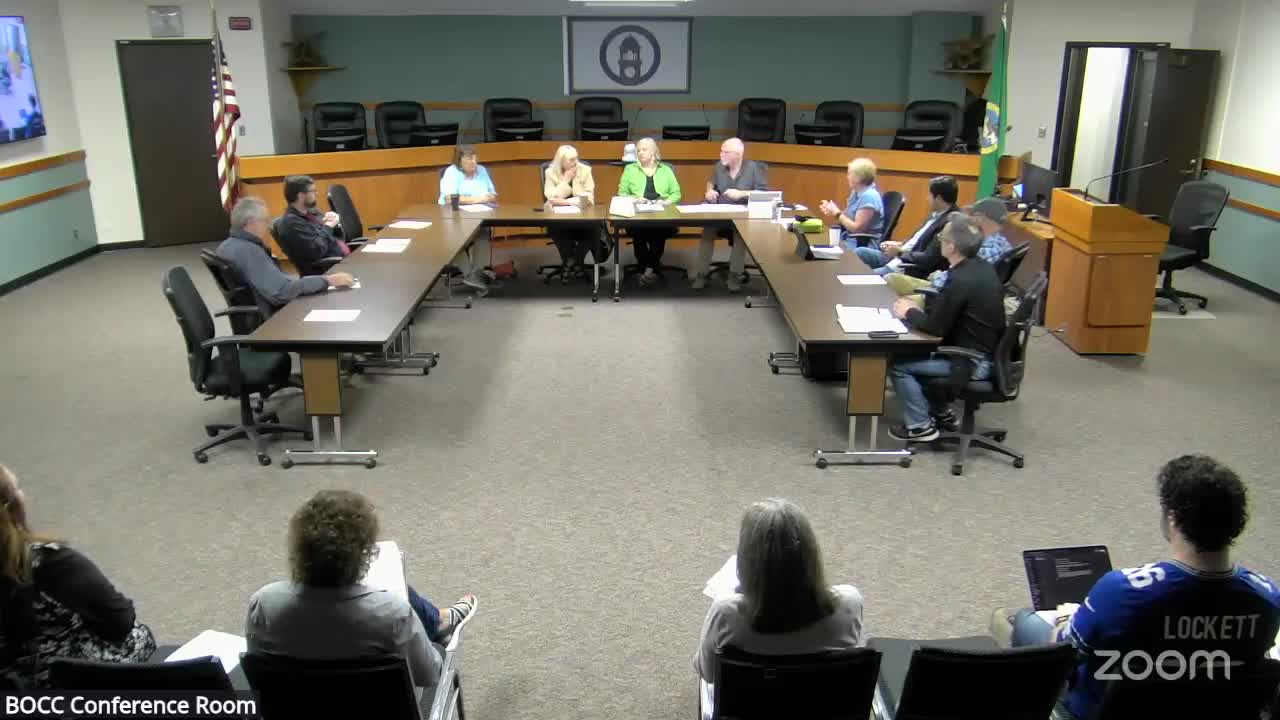
Summary
Members discussed distinctions between shelters and housing, building-code limits on temporary structures, inspection and anchoring requirements, operational costs of tiny-home villages, and whether county housing funds can support such projects.
Clallam County housing committee members and guests debated how to define and regulate temporary dwelling units — often called tiny homes — and whether those shelters qualify for county housing funds.
Sharon Maynard, chair of the homelessness task force, said the task force sees temporary dwellings as primarily within its scope and recommended deeper review there. “Temporary dwellings is really part more part of the homeless task force issues than it is for this committee,” she said.
Committee member Sarah clarified the building-code definition used in the discussion: “What determines something temporary is that it's only in place for a hundred and 80 days,” she said, referencing the International Building Code’s temporary-structure threshold. Several speakers contrasted that 180-day limit with models in which tiny-home villages operate for months or years as transitional shelter.
City staff described permitting and inspection differences. One staff speaker said some projects had been constructed off-site and placed without full local inspection, creating concerns about fire and life-safety standards; another noted that structures classified as vehicles (on wheels) are treated differently until they are anchored and given plumbing and kitchens, at which point building-code jurisdiction applies.
Speakers pointed to operational costs and oversight needs: a presenter described a 20-unit tiny-home village that costs about $300,000 per year to operate, including power, portable showers and other maintenance. A separate project leader said per-unit finishing costs have grown from roughly $12,000 to about $30,000.
Participants discussed funding eligibility. Committee staff said the county has, in the past, provided modest grants from housing funds to both permanent and shelter-style projects and interpreted some county programs as eligible for shelter-related expenses. Committee members noted that other funding streams — such as operation-and-maintenance grants tied to specific state or federal programs — also support tiny-home operations.
The group did not adopt a new policy but agreed to continue coordinating across committees and agencies, recommend that the homelessness task force convene building-code and health officials for targeted guidance, and consider language for the county comprehensive plan to clarify how tiny shelters and transitional villages should be regulated and funded.