
Mount Vernon public hearing centers on state-driven student personal device policy
Get AI-powered insights, summaries, and transcripts
Subscribe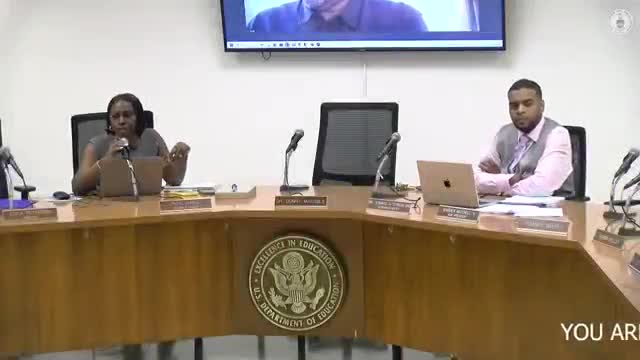
Summary
Parents, PTA leaders and district staff discussed implementation, communication and disciplinary questions around the state-mandated Student and Personal Electronic Devices Policy (Policy 5695), with officials saying the district must tailor a state directive and develop school-level plans and a communications rollout.
Mount Vernon City School District held a public hearing on its Student and Personal Electronic Devices Policy (Policy 5695) to gather parent and community input on how the state-mandated rule will be implemented and enforced across schools, speakers said.
The policy matters because New York State has issued requirements on student use of internet-capable devices during the school day; parents and district staff at the hearing discussed how to balance compliance with student needs, how disciplinary steps will be applied, and how the district will communicate changes to families.
District staff said Policy 5695 is largely state driven and that the district is now tailoring procedures for local schools. A district staff member said the district will require a “formal plan from every single principal to actually understand how they are going to uphold the law,” and that the district is developing a centralized communication plan to tell families what is expected and how students and staff will respond. The staff member added, “the state has made it very clear that suspension should not be the first rung” for an initial phone infraction, though the staff member said the state left a “very gray area for repeated offenders.”
Parents and PTA leaders raised several practical concerns. Janine Fertile, the PTA president of Mount Vernon STEAM Academy and vice president of the Mount Vernon PTA Council, asked whether parents had been involved in creating the state-level policy and whether parents were included in the district’s tailoring of the rule. Cynthia Crenshaw, a longtime PTA president at Cecil H. Parker Elementary School and a substitute teacher, said she supports a phone restriction in class and told the hearing she has observed students using phones ‘‘20/4/7’’ during instruction.
Speakers pressed for clarity on logistics and discipline. Sakai Brown, PTA president for Nelson Mandela/Jose Zalikov School, asked how schools will store collected devices and whether principals will apply a single standard across buildings. Warren Mitchell, a parent/resident, urged standardization across grade levels so parents know what to expect from kindergarten through the higher grades and asked whether the district is ready to implement a uniform approach. A district staff member answered that schools may use different collection methods (for example, pouches or collected storage) but that the district will require each principal’s plan and a communication schedule so families know the procedures.
Parents also asked how students who need assistive technology will be treated. A parent and board trustee, Erica Peterson, noted the rule covers internet-capable devices and includes smart watches and internet-enabled glasses; district staff confirmed devices required for a student’s 504 plan or individualized education program (IEP) are treated as exceptions and will be addressed in those plans.
District staff said the code of conduct will need updates to reflect device-specific discipline and pointed attendees to a discipline hierarchy in the district code (pages referenced during the hearing). Staff warned that efforts to collect a phone sometimes escalate into confrontation and that the district must plan communications and staff training to reduce those incidents.
No formal vote or board action occurred at the hearing. Instead, the district recorded public comments and directed staff to develop a communication plan, require principals’ implementation plans, and coordinate updates to the code of conduct and discipline procedures. The public hearing closed with staff and parents agreeing the district must provide clear, early written notice to families and accommodate students with documented needs.
The district posted the draft policy on BoardDocs and invited written input at the hearing; several speakers urged the district to ensure school phone systems and building communications are reliable so main offices can contact classrooms when needed.