
Massapequa board discusses multiyear proficiency targets for COVID-era cohort
Get AI-powered insights, summaries, and transcripts
Subscribe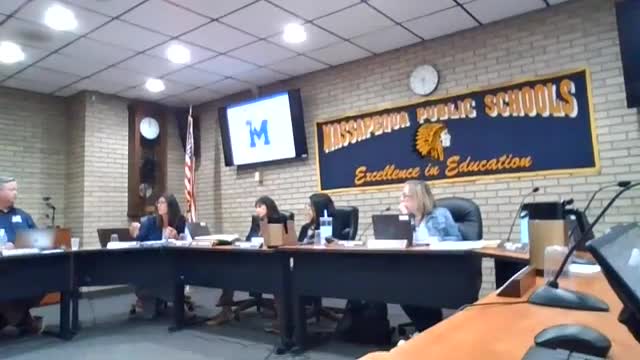
Summary
Board members and district staff discussed adopting multiyear reading and math targets focused on students affected by COVID learning interruptions, proposing grade-by-grade percentage goals and quarterly progress reporting.
Massapequa Union Free School District trustees and staff discussed setting multiyear proficiency targets aimed at the cohort that missed instruction during the COVID-19 pandemic, with staff proposing grade-level benchmarks to be revisited annually. The conversation focused on reading (tier 1 proficiency) and paralleled discussion of comparable goals for mathematics. District leaders said they will convert the board-level percentages into operational objectives and provide quarterly updates.
Board members asked whether to set one-year increments or a three-year target horizon and emphasized the need for rigorous but realistic goals. One board member proposed three-year targets (for example: grade 1 90 percent, grade 2 85 percent, grade 3 90 percent, grade 4 80 percent, grade 5 75 percent) as a starting map to be adjusted after each annual review. District staff said those grade-level numbers would be converted into specific objectives and interventions in a follow-up document.
District staff stressed that middle-school supports must be broader than academic interventions alone, calling for teams to pair academic supports with executive-functioning, attendance, and social-emotional interventions so students who now encounter multiple teachers and more complex schedules do not fall through gaps. Staff recommended using MTSS (multi-tiered systems of support) and targeted interventions beginning in early grades so that gaps are caught early rather than compounding in middle school.
Board members pressed on baselines and comparators. Some asked whether the district should measure progress against pre-COVID baselines rather than newly recalibrated norms; staff said veteran teachers’ qualitative feedback would be used alongside standardized measures to evaluate whether recalibration masks real deficits. Staff offered to collect teacher feedback and to report both the data trends and descriptive evidence about instruction and curriculum adjustments.
The board agreed to a schedule in which the district would turn the percentage-level goals into a set of measurable objectives and bring those objectives back for board review and formal adoption at an upcoming meeting. The district said it would provide progress reports to the board on a quarterly basis.