Get Full Government Meeting Transcripts, Videos, & Alerts Forever!
Get email alerts on the Student Mentoring Program topic
No spam. Unsubscribe anytime.
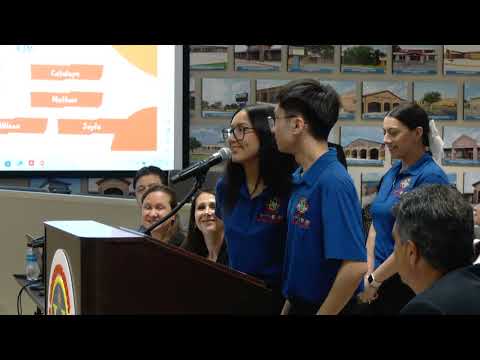
United High students present "United in Mentoring" program to UISD board
Summary
United High School students described a student-led mentoring program that paired high-school mentors with elementary students and proposed a sustainable schedule of visits; district administrators expressed support and discussed scaling and succession planning.
United Independent School District (UISD) student leaders presented "United in Mentoring," a student-led program that paired United High School mentors with elementary students to build leadership, confidence and academic exposure.
The presentation, delivered at the April 2025 UISD board workshop, detailed how United High students used a Google form and hand ballots to match 5–7 elementary mentees to high-school mentors, then ran themed activities (STEM, fine arts, leadership, ROTC, theater and dance) designed to develop four pillars the students called competency/confidence, ambition, citizenship and leadership. Student leader Jose Flores described the program as "We are the change," and said the group matched elementary students by field of interest and ran small-group activities intended to instill leadership and career exposure.
District administrators and board members praised the project and asked about sustainability. Rebecca Morales, associate superintendent for district administration and student services, said the administration supports continuation and growth and encouraged mentors to include underclassmen so the program could continue after current seniors graduate. Students proposed a sustainable routine of either two visits per semester to two elementary schools (four visits total) or two visits per semester to four schools (four visits total across the year) to reduce the burden on staff and classroom time.
Students across multiple United High cohorts described specific activities: a STEM/FFA cohort introduced elementary students to basic STEM concepts; a theater group staged a mock trial using Goldilocks and the Three Bears; a dance cohort used personality testing to design choreography; a ROTC mentor taught basic ceremony and drill; and music mentors conducted band and music activities. Presenters said the students saw measurable increases in confidence and participation during the program.
Administrators noted program logistics that will affect scaling: mentors' pull-out time from classes and the workload on student activities staff. Morales and the presenters said the CTE and activities staff and school leadership had identified ways to scale the model with one-day workshops and semester visits to reduce classroom disruptions.
No formal board action or vote was recorded in the workshop transcript. The students asked the board to support expansion and the administration to consider the program during planning for next year; board members asked for follow-up on implementation plans.
The board workshop record shows strong audience and trustee support; the presentation closed with multiple trustees praising the students' “legacy” and asking administration to explore districtwide expansion and succession planning for the program.
Ending
Students and administrators asked the board to consider funding and scheduling adjustments that would allow United in Mentoring to continue as a recurring student-advisory-led initiative. Administration said it would work with schools to explore a sustainable schedule that minimizes instructional disruption while preserving mentoring opportunities.