
Aurora mayor and community leaders urge county to oppose rapid closure of SW Snowden K–8 school
Get AI-powered insights, summaries, and transcripts
Sign Up Free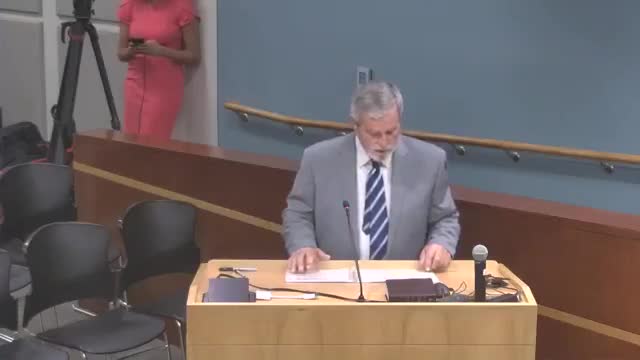
Summary
Mayor Cliff Williams of Aurora and other public speakers urged commissioners to oppose what they call a premature school-board decision to start closing SW Snowden K–8, requested county engagement and asked commissioners to attend a community forum.
Mayor Cliff Williams of Aurora told commissioners he and his community consider the March 25 school‑board vote to start closure proceedings for SW Snowden premature and insufficiently studied by the school system.
Williams said the town and Richland Township invested in a local strategic plan, including broadband and a Beaufort County Community College workforce center, and that the community expects the school system to present a fuller analysis of alternatives before moving to close the K–8 rural facility east of Chocquinity. "We believe the March 25 decision of the school board is premature. It is not conducted an analysis of the alternatives or shared with the public that explores all the possibilities…as opposing to hastily decide decisions to close SW Snowden based on BCS financial concerns only," Williams said.
Williams asked the county’s commissioners to attend a Beaufort County Schools community forum scheduled April 16 at 6 p.m. in the SW Snowden auditorium and to consider the town’s offer to present its strategic plan to the school board. He asked that county representatives help ensure alternatives — including ways the county might support mitigation of school-system budget concerns — are considered before a final closure decision.
Commissioners and public speakers raised additional operational questions during the meeting’s broader discussion about SW Snowden: service‑area travel time, whether nearby schools (e.g., Chocquinity Elementary or Middle) can absorb displaced students without new facilities or temporary classrooms, the cost‑benefit tradeoffs of keeping the school open versus transporting students, and whether enrollment or attendance metrics — and the state principal‑funding threshold — were correctly applied.
Several commissioners expressed concern that closing neighborhood schools reduces local community vitality and cited precedent where school closures changed town commerce and civic life. Commissioner Dunn urged public engagement and said the board should examine any budget claims and the logistics of bus routes and staffing before consent to closures. Commissioner comments emphasized that closure decisions are formally the school board’s responsibility but noted the county’s budget authority and political oversight role make county engagement relevant.
Ending: Commissioners urged continued public participation, said they would seek the school‑board materials and recommended attendance at the April 16 forum; staff were asked to obtain the title search and related documents for the property and to coordinate with the school system on the information requested by the town.