
Beaufort County commissioners and schools spar over reserves, teacher cuts and future of Snowden
Get AI-powered insights, summaries, and transcripts
Sign Up Free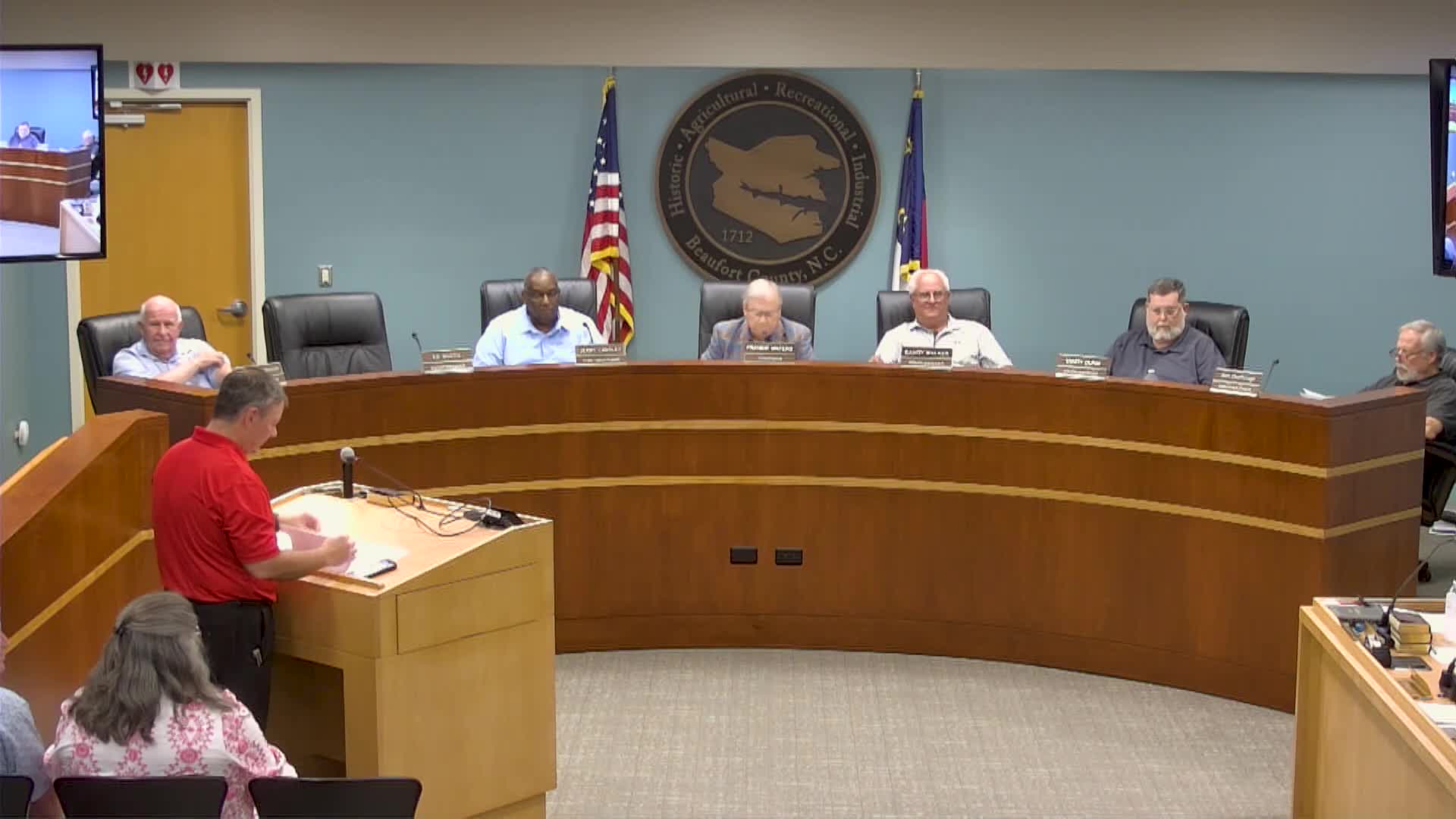
Summary
At a May budget workshop, county staff and Beaufort County Schools leaders debated restricted sales-tax revenue, a $500,000 land purchase drawn from school reserves, and a superintendent warning that 67 district positions could be cut if additional local funding is not provided.
County Manager Brian opened discussion at a Beaufort County Board of Commissioners budget workshop by presenting the county's recommended K-12 numbers, showing recommended county funding for schools of about $18.46 million and noting schools' original requests exceeded $29 million.
The disagreement that followed focused on restricted sales-tax revenues set aside for school capital (referred to in the meeting as Article 40 and Article 42), a $500,000 land purchase described as already earmarked in school reserves, and a large personnel shortfall the school superintendent said will force program and position reductions without added local support.
Why it matters: the county manager and the schools disagree on what funds are legally restricted, what remains available for operating purposes, and who should cover projected shortfalls caused by reductions in state-funded teacher allotments. Those disagreements could affect class sizes, school consolidations and the timing of capital projects.
Superintendent (Beaufort County Schools) told commissioners the district faces a loss of roughly 53.9 state-funded positions over time and that the district's plan shows 67 positions (teachers, TAs, custodial, maintenance) at risk if state allotments and current funding levels hold. The superintendent said the typical fully loaded cost of a new beginning teacher position is about $70,000 and used that figure to demonstrate a multi-million-dollar local budget impact if positions are not restored.
Anita (county chief financial officer) explained how restricted sales-tax articles affect the county budget. "Article 40 and Article 42 ... were put in place so the schools could have more funding for school capital and it is restricted for school capital needs," she said, and described how 60% of Article 42 revenues and other earmarked funds are routed to capital. Anita presented county estimates showing restricted revenue to schools at roughly $3,876,653 and the county's planned school debt service and cash capital payments totaling about $3,952,000, leaving an estimated $75,003.83 difference that might be moved from capital to operating under certain conditions.
A substantial portion of the session covered a disputed $500,000 county payment tied to the purchase of 4 acres of land for school use. Commissioner Detherich and others pressed for clarity about the funding source. The superintendent and Anita said the $500,000 had been previously earmarked by the Board of Education and drawn from school-held reserves tied to sales-tax capital funds and other designated reserves: "the $500,000 was already earmarked and allocated to the public school system," the superintendent said. Commissioners including Commissioner Richardson insisted the public should understand how those reserves were held and used and requested a thorough listing of funds and fund balances.
County Manager Brian and Anita pointed commissioners to the budget book details (page 64 for bond payment timing and other pages for fund balances). The county manager noted a school bond (taxable refunding GEO bond series 2021A) will have its final payment in May 2028, and that some debt service will convert to cash capital after that date.
On the smaller, local-school question of Snowden (a K-8 school discussed at length), commissioners asked about enrollment and staffing. The superintendent said Snowden's enrollment had declined to about 122 students and that the school had 22 teachers and 6 teacher assistants; he said 9 of the 14 teachers in the school's middle grades were not fully credentialed. When asked directly if the Board of Education could close Snowden, the superintendent said school closures are the school board's decision and that staff would work with affected employees to place licensed teachers elsewhere where possible.
Throughout the meeting a number of commissioners pressed for clearer, single-page summaries of all restricted and unrestricted fund balances. Commissioner Richardson specifically requested "a thorough audit listing" of all funds, fund balances and special fund ordinances so commissioners and the public can see how money is earmarked.
Discussion vs. decision: the session was a budget workshop and produced no formal votes or ordinance adoptions. County staff provided budget detail and estimates; the Board of Commissioners asked for additional documentation (including the title search and fund-balance details) and the superintendent said he would provide requested information. No binding change to funding allocations or school closures was adopted at the meeting.
Context and constraints: speakers repeatedly emphasized that some revenues are restricted by state statute to school capital (the meeting referenced Article 40 and Article 42 and state law) and cannot legally be diverted to operating expenses. Commissioners argued those monies are nevertheless taxpayer funds and pressed for transparency on how they were reserved and later spent.
What's next: the commissioners will continue budget work sessions; staff said any mid-year changes required by higher-than-expected Article 40/42 collections would require an additional allocation to schools. The county manager pointed commissioners to future budget meetings where service expansion requests and final adoption will be scheduled.