Get Full Government Meeting Transcripts, Videos, & Alerts Forever!
Get email alerts on the Opioid Settlement topic
No spam. Unsubscribe anytime.
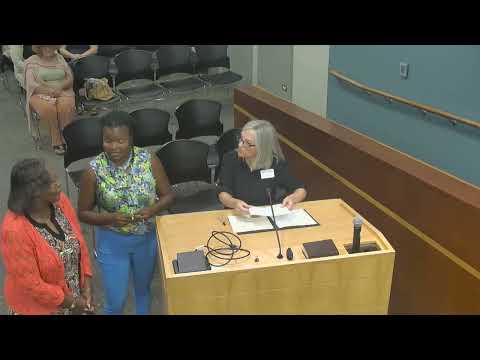
Commissioners dispute who controls $20,000 in opioid-settlement funds for drug court
Summary
Beaufort County commissioners debated whether a $20,000 award intended for the county drug court can be released without further community review, leading to a heated exchange over who has final authority to obligate opioid-settlement funds.
Beaufort County commissioners debated whether a $20,000 award intended for the county drug court can be released without further community review, leading to a sharp exchange on Tuesday night over who has final authority to obligate opioid-settlement funds.
The dispute erupted after staff described the county’s multi-year opioid spending plan and said the county follows a community-driven process for awarding pilot funds. Commissioner Richardson said the board already approved use of $20,000 for the drug court and that the check should be written. “It was not awarded to some phantom organization out here somewhere. It was awarded to the Beaufort County Board of County Commissioners, and I made a motion that we use $20,000 of that money to help the drug court,” Richardson said.
County staff and task force members countered that the county’s adopted spending plan calls for continued community input and for proposals to be reviewed by the behavioral-health task force before returning to the board. A staff speaker told commissioners: “There has to be public input.” Staff said the county previously selected “option B” under the national settlement framework to allow a broader set of strategies — but that option also carries more extensive reporting and community strategic-planning requirements.
Commissioners and staff described steps already taken since the county began planning in 2022: a 2022 spending resolution, the hiring of an opioid coordinator and educator, pilot grants, and multiple rounds of community forums to shape strategies. Staff said the board earlier approved a spending plan that allocated specific amounts for peer supports, an opioid educator and coordinator, community pilot projects and operational supplies; the $20,000 award at issue was included in that plan.
Commissioner Richardson repeatedly insisted the board had authority to obligate funds immediately. County staff and other commissioners said the approved spending plan established both internal allocations and a process that includes community review and task-force recommendation before individual disbursements beyond pre-authorized lines are finalized.
No new spending motion was adopted at Tuesday’s meeting. Staff said the county will continue the community-request-for-applications process this summer, return applications to the task force for evaluation, and then present findings and any proposed awards to the board in spring 2026.
The discussion included operational detail: the county has set aside specific line items in the opioid settlement spending resolution — for peer-support stipends, an opioid health educator and an opioid coordinator — and staff said using non-opioid funds to delay some draws has preserved settlement funds for pilots.
What’s next: staff will continue the RFA cycle, include the drug court among eligible applicants, and return recommended awards or a recommended spending proposal to the board after task-force review and public input.