
Local recovery advocates urge commissioners to fund permanent 12‑step clubhouse with opioid settlement money
Get AI-powered insights, summaries, and transcripts
Subscribe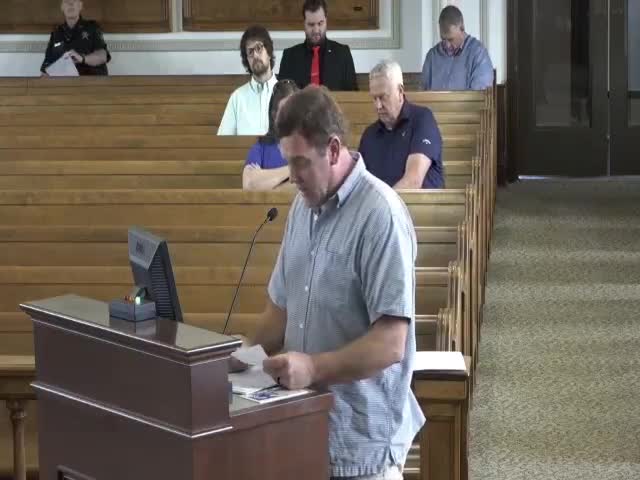
Summary
Members and former residents urged Haywood County commissioners to use opioid settlement funds to provide a permanent clubhouse for 12‑step meetings, citing long-term recovery benefits and previous loss of a Waynesville clubhouse during the pandemic.
Multiple speakers during public comment urged Haywood County commissioners to allocate a portion of opioid settlement funds to establish a permanent 12‑step recovery clubhouse in the county, saying such a facility would provide continuity, peer support and a stable place for Alcoholics Anonymous, Narcotics Anonymous and related groups.
Trey Balance, a resident and recovery advocate, asked commissioners to "allocate a portion of the opioid cell settlement funds to either build a new 12 step recovery clubhouse or acquire an existing building for this vital purpose." He described his personal experience of relapse and recovery and said a clubhouse provided a lifeline.
Will Pauley, who identified himself as a registered nurse and certified addictions counselor, described long-term professional and personal experience with addiction recovery and said a brick-and-mortar clubhouse provides permanence and community stability after treatment: "It provided a sense of permanence, reliability, and a, a sense of community and state stability that I very very much needed." Tom Murphy, speaking for the newly formed Camel Club (a 501(c)(3) nonprofit), and other speakers including Joey Essie and CJ Deering described losing the Waynesville Triangle Club site during the COVID era and being unable to secure affordable, permanent space since.
Speakers gave local context and numbers in support: Tom Murphy said Haywood County’s population is about 63,000 and offered an estimate of up to 6,000 people locally "struggling with drug and alcohol," using national prevalence figures and applying them to county demographics. CJ Deering and others cited local emergency-room statistics and previous jail-based recovery programs as background: Deering said the local emergency room saw over 600 opioid overdoses last year and listed mental-health visit counts discussed in his remarks.
Commissioners responded during the constituent concerns portion that they heard the presenters, thanked them for their courage, and said staff would follow up on space needs. One commissioner asked whether the groups had a point person and noted county staff could discuss possible support options; another asked if meetings were listed online and staff confirmed that local meeting information is available through AAA.org and that the groups currently meet behind First Methodist Church in Waynesville.
No formal funding decision was made; the presentations were made as public comment and commissioners requested staff follow-up to explore potential county assistance with locating permanent space or other support.