Get Full Government Meeting Transcripts, Videos, & Alerts Forever!
Get email alerts on the Industrial Bonds Tax Abatement topic
No spam. Unsubscribe anytime.
Council moves forward on industrial revenue bonds and tax-abatement framework for Lowe’s distribution project
Summary
Bond counsel told the council the proposed industrial development revenue bonds and tax-abatement arrangement are for a Lowe’s warehouse project; the new landlord is an ElmTree special-purpose entity and Lowe’s will continue as operator.
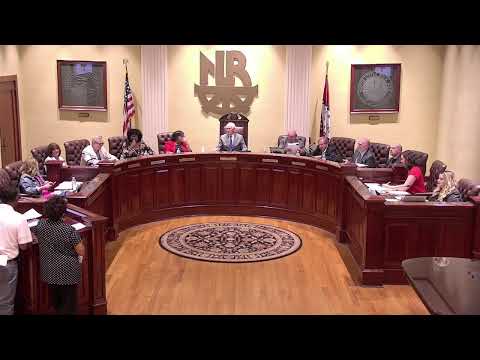
City bond counsel Michelle Allgood told the council that the industrial development revenue bond transaction under consideration relates to a Lowe’s warehouse facility; the council held the required public hearing and no members of the public testified. Allgood told council members the project previously appeared before the council on Nov. 27, 2023, and that the underlying landlord/owner changed since that time. The new owner is a special-purpose ElmTree entity (ET v LaRock LLC); Lowe’s will remain the operator under lease.
Allgood explained key financial parameters as presented at the meeting: the ordinance would authorize industrial development revenue bonds and related documents and approve the tax-abatement arrangement for assets up to a not-to-exceed amount of $120,000,000. The abatement structure discussed would reduce the otherwise due property taxes by 65% for the abated portion, with the entity paying 35% of what would otherwise be owed. Counsel said there is no financial obligation of the city for the project. The council discussed that pilot payments under the payment-in-lieu-of-taxes (PILOT) framework would be distributed in the same proportions as taxes are distributed, and counsel noted that the local school district would receive the largest share of the pilot payments.
Why it matters: The proposed bond and abatement framework is designed to support a large distribution facility that proponents say would create new taxable activity on previously low-value land; council members asked for future briefings on estimated fiscal numbers so the city can anticipate what revenue will return to local government during the abatement period. Staff said the city could provide projected numbers in the future, but the ordinance authorizes a cap rather than a fixed assessed-valuation amount.
Outcome: After the public hearing and staff responses to questions, the council moved to suspend readings and voted to adopt the ordinance on first reading; counsel reiterated there is no direct financial liability to the city for issuance of the bonds.