Get Full Government Meeting Transcripts, Videos, & Alerts Forever!
Get email alerts on the Stormwater Drainage topic
No spam. Unsubscribe anytime.
Ashley Downs residents press council for plan after repeated flooding; city engineer has design but funding shortfall remains
Summary
Ashley Downs HOA president told the council last week's storm produced 4 to 6 inches of rain that overwhelmed local drainage, left yards submerged and nearly flooded homes; the city engineer has a design to upsize pipes but staff and council said funding must be identified.
Residents of the Ashley Downs subdivision urged the North Little Rock City Council on June 28 to move from discussion to action after repeated drainage failures left yards submerged and prompted residents to place sandbags at homes during recent storms.
Why it matters: Recurrent flooding threatens property and quality of life for Ashley Downs residents and may indicate underdesigned or failing storm infrastructure in a part of Ward 2.
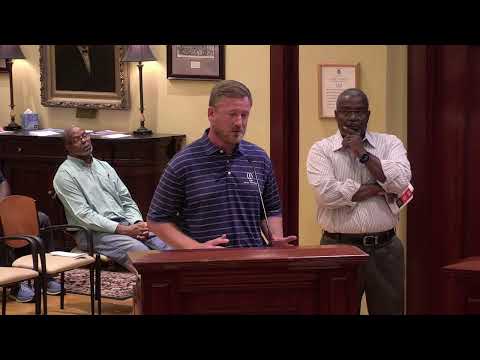
Rodney Cotton, Ashley Downs homeowners association president, told the council that a recent storm deposited "between 4 to 6 inches of rain in a short period of time," overwhelming local drainage, submerging yards and nearly allowing water to enter homes. "This flooding has caused property damage and significant emotional and financial distress for our neighbors," Cotton said. He asked for a clear, actionable plan and a timeline for remediation and offered to work with the city.
City Engineer Cook said staff have visited the neighborhood, the street department has "skimmed a couple of the ditches," and engineers have prepared a design for the area. Cook said the existing detention and conveyance pipes likely would need to be upsized to move water out faster: "In order to get the water out faster, those pipes existing pipes would need to be upsized. And I have a design ready to go for that." Cook said staff had provided an estimate to the district council member and that the next step is identifying funding.
Council members acknowledged the problem but noted that funding options are limited. Council Member Hart said the city had been searching for funding options and that some projects originally anticipated for 2025 had been shifted. Council Member Hamilton and others said the upcoming 2026 budget process is an opportunity to allocate funds for engineering and construction.
Outcome and next steps: No immediate appropriation or construction was approved at the meeting. Council members asked staff to report back with options, and Council Member Hart suggested staff prepare a report or neighborhood meeting update outlining possible solutions and timelines. The engineer indicated a design and cost estimate exist but that city funding has not been secured.
Discussion-only versus formal action: Remarks occurred during public comment and council discussion; the meeting produced direction to the engineer and council to pursue funding options and communicate with residents, but no formal funding action or contract award was taken.
Ending: Residents asked for concrete timelines and involvement in planning; staff said a design exists and funding options will be explored during budgeting and grant-seeking processes.