Get Full Government Meeting Transcripts, Videos, & Alerts Forever!
Get email alerts on the Transit topic
No spam. Unsubscribe anytime.
Princeton council agrees to hire Telos Advisors and pursue 6‑month pilot to expand shuttle service
Summary
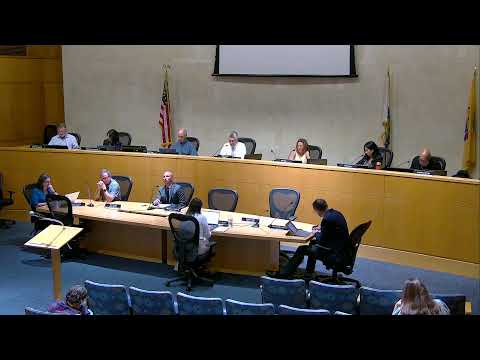
Princeton’s mayor and council on Aug. 25 authorized staff to hire Telos Advisors to develop an implementation plan and help prepare bids for an expanded municipal shuttle, and signaled support for a short pilot period (approximately six months) to test a second vehicle linking the Princeton Shopping Center and the Dinky rail line with downtown destinations.
Princeton’s mayor and council on Aug. 25 authorized staff to hire Telos Advisors to develop an implementation plan and help prepare bids for an expanded municipal shuttle, and signaled support for a short pilot period (approximately six months) to test a second vehicle linking the Princeton Shopping Center and the Dinky rail line with downtown destinations.
The decision follows a transit study by Nelson ygaard that found residents want more direct and frequent service to the Princeton Shopping Center, Palmer Square, Firestone Library and the Route 1 corridor. Jim Purcell, a staff member presenting the study, told the council the town’s current service is a single 14‑passenger cutaway shuttle that runs Monday–Saturday from about 7:30 a.m. to 9 p.m., costs $362,164 this year and averages about 89 boardings per weekday (roughly seven boardings per revenue hour).
Nelson Nygaard presented multiple short‑term scenarios. The most immediately viable option is adding a second vehicle to operate a direct shuttle between the shopping center and the Dinky with stops on Harrison and Nassau; the additional vehicle was estimated by staff at about $32,930 per month (roughly $395,000 annually), bringing a two‑vehicle operating total to about $758,000 a year. A lower‑cost stopgap scenario—keeping 1 vehicle but splitting service across two fixed loops—was discussed but described as undesirable because it would reduce service for existing riders.
Why this matters: council members said the proposal aims to improve frequency and connections for new multiunit housing along the shopping‑center corridor, to provide options for employees who cannot find downtown parking and to serve residents without convenient NJ Transit access. Several council members favored hiring Telos to sharpen a bid specification and to assess microtransit and other hybrid approaches before committing to a multi‑year contract.
Council discussion and staff clarifications
Councilmember Michelle said the next phase should move off engineering and into implementation; she supported hiring Telos and noted the pilot could be flexible. Councilmember David raised microtransit and hybrid options, saying a demand‑responsive model could fill gaps if daytime ridership is low. Purcell and other staff said Nelson Nygaard had included microtransit in its evaluation but judged it a mid‑ to long‑term option because establishing a microtransit program requires additional time and operational setup.
Funding and timing
Staff identified several funding buckets: developer contributions to a sustainable transportation fund of $800,000; Princeton University commitments totaling $1,500,000 over five years (staff said the university contributes about $300,000 per year and that the city has already received at least some of those payments); an American Rescue Plan Act (ARPA) award of $75,500 to expand service; a Mercer area transportation grant (about $105,000) to install electronic bus‑stop displays; and possible use of parking utility revenue. Staff said the university funds and other near‑term reserves would cover an initial 12–18 months of additional operating cost, and that staffing, procurement and vehicle delivery timelines (including expected electric vehicle shuttles in 2026) affect when a permanent expanded service could begin.
What the council directed
Council members agreed to bring Telos Advisors on quickly; staff said the city’s purchasing officer (QPA) could issue an agreement and that Telos would report initial implementation strategies within roughly three weeks and a fuller six‑week product to guide a bid process. The council voiced informal support for testing an additional vehicle on a six‑month pilot while the consultant refines routing, stop locations and procurement documents. No formal roll‑call vote on a contract award to Telos was recorded in the meeting minutes; staff said the QPA can execute the contract under administrative authority.
Public input and stop infrastructure
Several residents and council members urged attention to stop infrastructure and scheduling. A resident who identifies herself as Libby described long waits at present stops—45 minutes between runs for some riders—and supported the two‑bus option for more frequent pickup. At least one commenter reported a missing bus shelter listed in earlier plans and asked the city to restore the shelter commitment; staff responded they would investigate and follow up.
Next steps
Staff will finalize an agreement with Telos Advisors, receive the consultant’s recommendations on routing and bidding, and return to council with a recommended procurement approach and a proposed pilot duration (the council expressed a preference for a six‑month evaluation). If the council chooses to advertise for operations, the bid would follow the consultant’s recommendations and the city would consider options ranging from a single‑vehicle hybrid to a two‑vehicle fixed route.
(Reporting note: quotes and attributions are drawn from council meeting remarks Aug. 25, 2025. The council’s statements about available funding and the university contribution were clarified during the meeting.)