Get Full Government Meeting Transcripts, Videos, & Alerts Forever!
Get email alerts on the Telecom Infrastructure topic
No spam. Unsubscribe anytime.
Princeton panel approves two Crown Castle small‑cell installations, delays Palmer Square decision
Summary
The Princeton Historic Preservation Commission approved small‑cell installations at 122 Nassau Street (Shady Caldwell House area) and 120 John Street (Dorothea House vicinity) with conditions, and continued a separate Palmer Square proposal for further study and visual simulations.
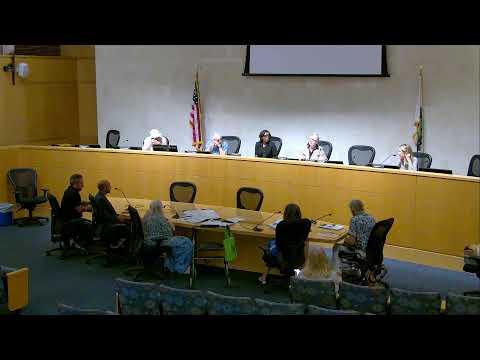
The Princeton Historic Preservation Commission on Aug. 18 approved two Crown Castle small‑cell wireless installations in the town’s historic districts but postponed decision on a third, more visible Palmer Square site.
Commissioners voted to approve the installation proposed near the Dorothea House at 120 John Street and a replacement decorative pole and cabinet on Nassau Street near the Shady Caldwell House, asking that the applicant coordinate with the municipal arborist on tree protection. The Palmer Square South installation, adjacent to the former post office (Triumph Brewery), was continued for further review and visual simulations; the commission set a control hearing date for Oct. 20 (with Nov. 17 as a fallback).
Why it matters: Crown Castle officials and carrier engineers say small cells are needed to fill local cellular coverage and capacity gaps — particularly during crowded events and for emergency calls, which are increasingly placed by mobile phones. Commissioners and community members said the installations must respect the character and visibility of the Central and Witherspoon‑Jackson historic districts.
Crown Castle attorney Robert Gordioso introduced the company’s team. John Tomassini, Crown Castle external affairs manager, described the company’s mission and scale and said small cells “are what brings your signal down to the ground,” to densify networks and improve capacity. Lisa Mozi, Crown Castle’s permitting manager, reviewed technical drawings and site dimensions for the three proposed locations and answered detailed questions from commissioners and staff about cabinet size, concrete pads, handholes and meter placement.
On Nassau Street (in the Route 27 state right‑of‑way in front of the Shady Caldwell House and across from 122 Nassau), the company proposed to remove an existing fixture, install a taller decorative pole, mount an antenna at the top, and place a 43‑by‑25‑by‑6‑inch concrete pad with a 55‑inch (effective 61‑inch with plinth) ground cabinet set flush to grade. Elizabeth Kim, Princeton historic preservation officer, confirmed the site is also subject to Section 106 review because of the proximity to nationally registered historic resources and noted the applicant’s commitment to reinstall a vintage green “cobra‑head” luminaire and use matte‑black paint on equipment to match prior approvals.
At 120 John Street (Witherspoon‑Jackson Historic District, Dorothea House), Crown Castle proposed replacing an existing traffic signal pole with a matte‑black pole, mounting the antenna, and placing a ground cabinet centered in the triangular lawn area; the cabinet pad was cited at 36 by 22 by 6 inches. The applicant proposed landscaping — inkberry holly and Saint Johnswort — to screen the cabinet.
Commissioners asked technical and visual questions: why some utility equipment (PSE&G meters and disconnects) are mounted externally on the cabinet (Mozi said that is a PSE&G requirement), how large the mast arms will be, whether handholes will create tripping hazards (company representatives said handholes and equipment would be flushed to grade), and whether tree roots could be affected (the applicant said proposed work tracks existing pole locations and should not impact major roots).
Votes and conditions: For 120 John Street, Commissioner Roger (last name on file) moved to approve; Commissioner Elrick seconded, and a roll‑call vote recorded unanimous support from members present. For the Nassau Street site, the commission approved the application with the explicit condition that Crown Castle coordinate with Princeton’s municipal arborist to protect the nearby large street tree; that motion passed after a second by Commissioner Emily Kroll.
Palmer Square: Commissioners focused the most scrutiny on the Palmer Square South proposal because the new, larger pole would sit on axis with the square’s green and be highly visible to visitors entering the retail and event area. Crown Castle submitted letters from its RF engineers and a Verizon RF manager saying rooftop or building‑mounted alternatives within Palmer Square would not meet radio‑frequency objectives and could cause “signal overshoot.” Commissioners nonetheless urged Crown Castle to provide realistic photo simulations, consider alternate placements closer to the Winberry/Our House side, and work with municipal staff and Palmer Square management; the commission voted to continue the Palmer Square application to allow additional study and the HPC’s independent review if requested.
Discussion vs. decisions: The commission separated factual approvals (two site approvals, one with an arborist condition), direction to staff and applicant (requests for surveys, matching luminaires, ADA compliance, and additional visuals), and the formal continuance of Palmer Square to a future hearing. No policy changes or zoning waivers were adopted.
Next steps: Crown Castle agreed to provide the requested clarifications, photo renderings and exact pole specifications for the Palmer Square site; the HPC said it may retain an independent RF consultant, funded by applicant escrow, to evaluate siting alternatives before a final vote.
Ending note: Crown Castle representatives said the three sites are intended to address “holes in coverage” identified by carrier engineering and by public safety staff. The commission’s approvals for the two peripheral sites will allow Crown Castle and its carrier customers to begin permitting and coordination work; the more visible Palmer Square proposal must return with additional visual material and technical analysis for further review.