Get Full Government Meeting Transcripts, Videos, & Alerts Forever!
Get email alerts on the Professional Development Assessments topic
No spam. Unsubscribe anytime.
Silver Consolidated Schools outlines multi-year professional development push, ties assessments to classroom practice
Summary
District presenters described an ongoing strategy to sustain professional learning communities, write common formative assessments and align local assessments to state results to produce steady, sustainable gains in student outcomes.
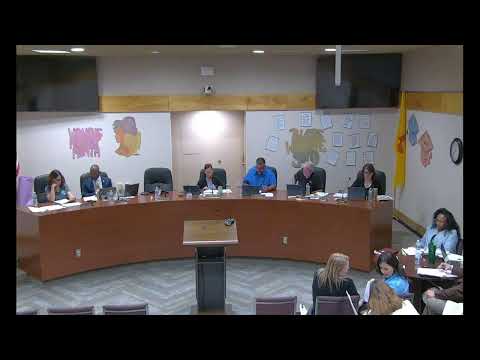
Miss Barris, a district staff presenter, told the Silver Consolidated Schools board on March 31 that the district is continuing a multi-year professional development effort focused on PLCs (professional learning communities), RCA (root cause analysis), classroom strategies, mental health and assessment alignment.
The presenter said the goal is to “train our staff and admin to build and sustain a movement,” noting the district prefers steady, sustainable gains rather than short-term spikes. “When you grow in assessments, if you start growing 20 to 30%, you might wanna question that because that's hard to sustain,” Barris said.
Barris described the district’s use of Performance Matters and common formative assessments (CFAs) to align teacher-created assessments with state tests. She said teachers now write their own assessments in the district system so local scores become a reliable predictor of state results; when correlations are poor, the district will revisit assessment rigor. “What we wanna do is we wanna see a clear indicator … is what the teachers is what they're doing, their level of rigor, what they're giving to the students, is it matching?” she said.
Barris reviewed recent professional development attendance: small initial cohorts in September, larger groups in November (46 attendees), 12 attendees in January and a projected 11 for June. She said the district makes a strategic choice to invest in staff it plans to retain and to send local staff to summits rather than relying permanently on external providers. “We will no longer have an outside person do that. It will be our own people,” Barris said of the assessment-writing work.
Superintendent Will Hawkins and board members pressed on alignment across grades. Dr. Diaz asked whether the plan will improve horizontal and vertical consistency; Barris said the PLCs and scope-and-sequence documents—“living documents” posted on the district web page—are the mechanism to achieve vertical alignment so instruction builds year-to-year.
Nut graf: The district presented a sustained, staff-centered professional development strategy intended to produce modest, durable assessment gains through teacher-written CFAs, PLC collaboration and use of Performance Matters as the assessment platform.
Board members asked about access and next steps. Barris said once staff get system access they will develop CFAs in PLC meetings and use the results to support colleagues. She said the district still plans to offer advanced options—AP, dual credit and local strategies—based on staffing and credentials, especially at the high school level where the SAT and other assessments require different preparation.
Ending: Barris asked the board for questions and closed after a brief exchange. The presentation did not include a separate action vote; the board reviewed the information during its work session and later approved the consent agenda at the regular meeting (see “Votes at a glance” in other articles for outcomes).