
Woodland teachers union tells board more than half of respondents considered leaving; cites pay and morale
Get AI-powered insights, summaries, and transcripts
Subscribe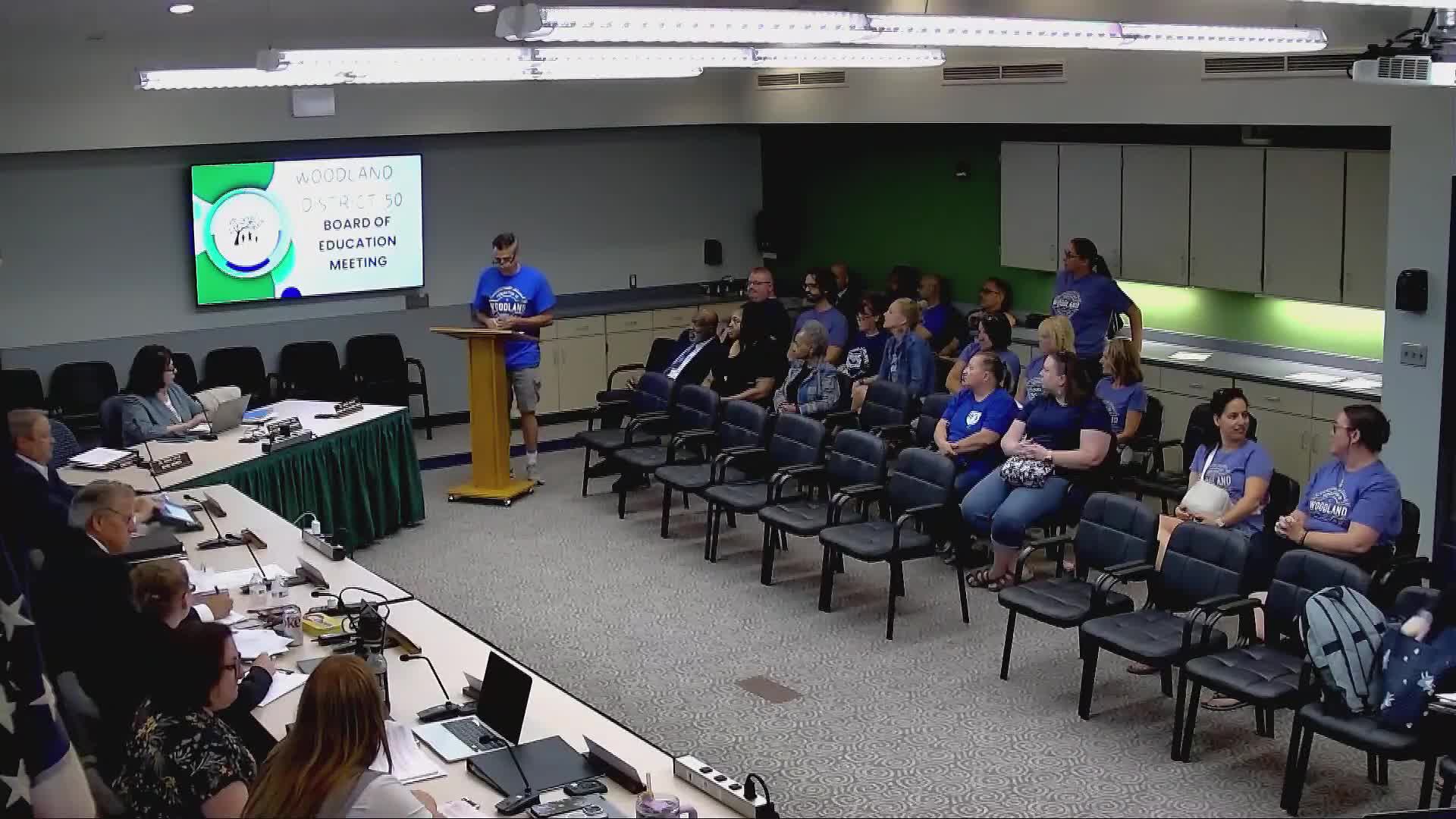
Summary
Union leaders presented survey findings showing over 50% of respondents have thought about leaving the district, cited compensation as the main reason, and urged the new board to make recruitment and retention a priority.
Peter Lasko, a second-grade teacher and president of the Woodland Federation of Teachers and Staff, told the Board of Education that a union survey of nearly 400 teachers and staff found more than half had thought about leaving the district or were actively seeking employment elsewhere.
“As of June 16, the district has 100 open positions,” Lasko said. He told the board the union calculated a 46 percent increase in the average staff resignations comparing 2017–2021 to 2022–2025 and said compensation was identified as the number-one reason for separations.
Karen Barrett, introduced as a retired Woodland teacher and the union’s vice president, said only 42 percent of respondents feel valued by administrators and just 16 percent feel valued by the board. “There is a perception that board engagement is largely limited to ceremonial or photo opportunities,” Barrett said, and urged the board to reflect on the survey results.
Debbie Hrabowski, who identified herself as a mask specialist at Belle Woodland Elementary and a building rep, and Shelly Carlson, a math interventionist and union secretary-treasurer, echoed the concerns. Carlson summarized staff responses: she said members reported “an inconsistent leadership environment that lacks teacher input, lacks clear communication, and creates instability” and that many staff feel undervalued and undercompensated.
Carlson also noted the union’s view that the district’s reserves could be used to address staffing issues. “Addressing this would require only a small portion of the $88,000,000 in reserves,” she said.
Board members did not take an immediate vote or issue a directive at the meeting; the public comments concluded with the union leaders asking the board to begin a collaborative process to address recruitment, compensation, and retention.