
Hackensack residents and business owners press council on unlicensed shops, parking and utility restorations
Get AI-powered insights, summaries, and transcripts
Subscribe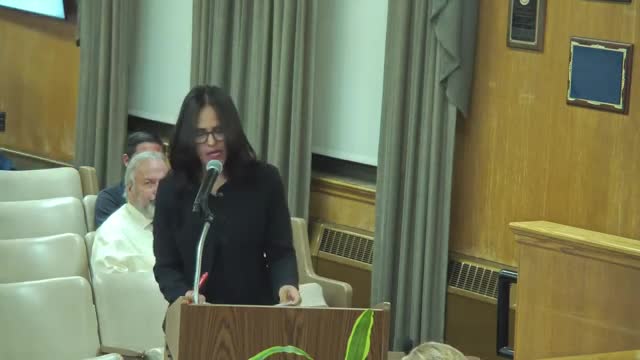
Summary
Multiple residents and a Hackensack business owner raised concerns about unlicensed barbers/salons, permit parking on DeWolf Place, rooming houses, street restoration after utility work and enforcement of local codes. Council members said staff would follow up and referred specific complaints to city offices.
Several residents and a Hackensack business owner told the council on Sept. 9 that enforcement of business licenses, neighborhood parking and street restorations needs more attention.
Why it matters: Unregulated businesses, persistent parking problems and poorly restored streets can affect public health, safety and the economic viability of licensed local merchants.
Erica Solis, who said she owns a salon at 84 Anderson Street and has lived in Hackensack most of her life, told the council she has repeatedly reported nearby businesses operating without licenses. "There are so many people unlicensed," Solis said at the meeting, adding that she had seen procedures such as lip injections and botox done by unlicensed operators. "They put botox in the lips ... without the right license," she said, and described repeated contacts with the health department and requests for enforcement. Solis asked the city manager to follow up and provide specific enforcement action for named businesses; the mayor asked her to provide addresses offline so staff could investigate.
Residents also asked the council to take action on parking. Kareem Jacobson (374 DeWolf Place) and Greg Dobbin (388 DeWolf Place) raised permit-parking requests for DeWolf Place, citing commuter parking from nearby streets and an absence of driveways on many homes. Helen (High Street) said a handicapped household member was forced to park far from home because other cars occupy neighborhood spaces. Several speakers asked for speed bumps on DeWolf Place to curb speeding.
Rooming houses and transient rentals were another recurring concern. Dobbin said rooming houses are "popping up everywhere" and linked them to parking strain. Council members said they would investigate whether properties are operating illegally or require licensing.
Street restoration after utility work was raised by Darlene Bodie, who cited a recent state law (she referenced "bill 22 32, section 1 e") and told the council that utilities must fully restore streets and municipalities can fine utilities that fail to restore surfaces. "The municipalities have the right to fine PSE and G or other entities ... from a 100 to a thousand dollars," Bodie said, referring to new restoration enforcement authority she said the state legislature authorized; she urged the city to use that authority to require long-term restorations rather than temporary patches.
Council response: Deputy Mayor Toomey thanked speakers and said the council would look into the cited issues. The mayor asked Solis to provide specific business addresses off-line so the city manager and code-enforcement staff could follow up. Council members said permit-parking requests and other neighborhood complaints will be investigated by staff and that enforcement actions will be pursued where applicable.
What changed or was decided: No new ordinances or enforcement actions were enacted at the meeting. City officials requested residents provide specific addresses to allow targeted follow-up and enforcement.