Get Full Government Meeting Transcripts, Videos, & Alerts Forever!
Get email alerts on the Budget Cuts Furloughs topic
No spam. Unsubscribe anytime.
Clifton council rejects notice of bargaining for voluntary furloughs as budget debate escalates
Summary
A motion to authorize notice of bargaining for voluntary furloughs and potential layoffs failed after hours of debate about alternatives, use of sidewalk trust funds and likely impacts on public safety.
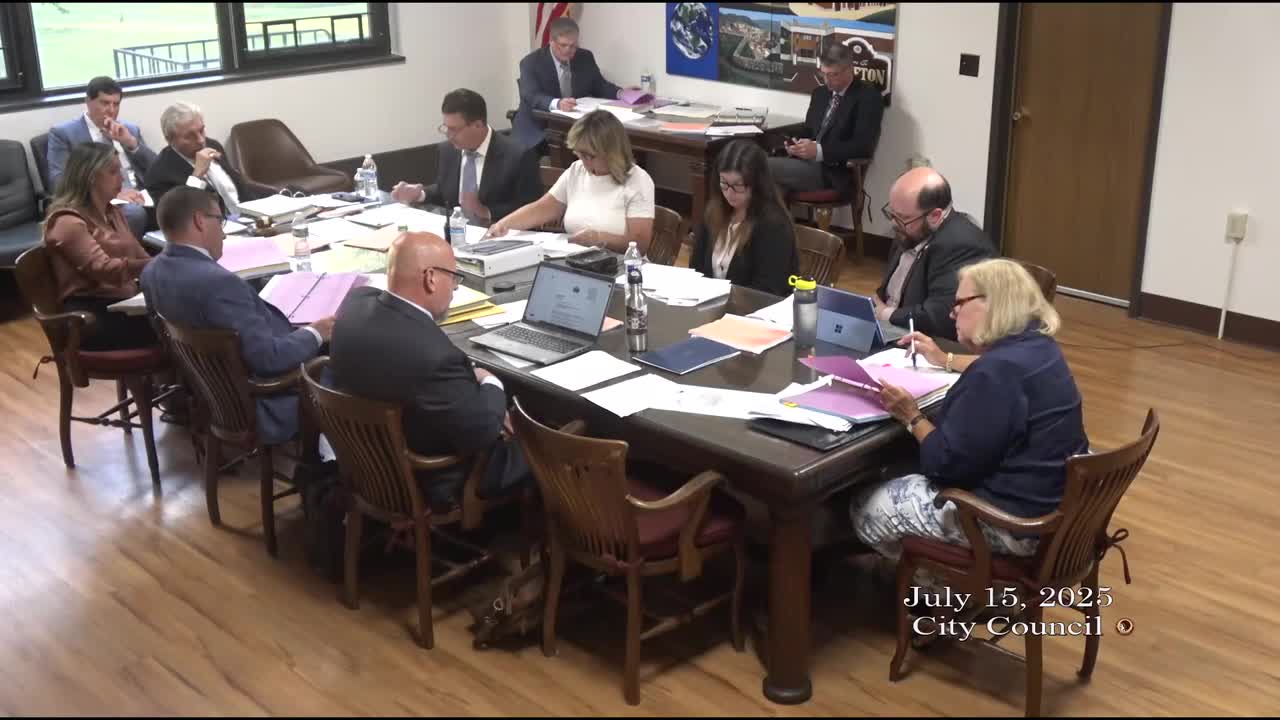
The Clifton City Council on July 15 rejected a motion to authorize notice of bargaining with municipal labor units that would begin negotiations over voluntary furloughs and potential layoffs designed to meet a council directive to find $3,000,000 in operating reductions.
City Manager Gary DeMarzo told the council the staff plan was structured as "three columns: cuts, furloughs, layoffs equals 3,000,000," meaning the administration would attempt cuts first, then voluntary furloughs, and only then layoffs if savings shortfalls remained. Council members asked for more concrete numbers and a list of where cuts would fall before agreeing to bargaining notice.
The vote followed an extended public and council debate about alternatives. Several council members and the city manager said the administration had identified roughly $1.5 million in available sidewalk/trust funds that could be applied toward the $3 million goal, but members differed sharply about whether such reserves should be used before pursuing reductions to personnel or services. One council member warned that, if the bulk of the savings had to come from personnel, public-safety units could be affected; other members said they opposed furloughs or layoffs in police, fire and DPW.
Labor counsel and administration described the notice of bargaining as a procedural step that would allow negotiation with multiple bargaining units about voluntary furlough programs and alternatives. The manager said a voluntary furlough program would not by itself compel an employee to participate: "There is no adverse action of the employee," he told the council, but he said that if voluntary participation were insufficient administrators would move further down the matrix toward layoffs.
Council members pressed for specifics about timing and legal limits. The city manager said upcoming deadlines in the budget calendar — including a public hearing scheduled for the council’s August meeting — shaped the urgency. Several members said the public had a right to see the specific department-level proposals before the council authorized the administration to negotiate with unions.
Outcome: The motion to authorize notice of bargaining failed; no bargaining notice was issued that evening. Councilmembers who opposed the motion said they were not provided enough detail on the distribution of cuts and on which departments would be affected. Supporters argued the step was necessary to begin time‑sensitive talks with bargaining units.
What happens next: Administration said it will continue to search for cuts and report back with a more detailed list, and councilmembers asked for written, department-level cost‑reduction proposals in advance of the next meeting. The council also discussed using sidewalk trust balances as a partial, short‑term offset while a longer plan is developed.