
Clifton council amends sewer connection fee ordinance to exempt very small home additions
Get AI-powered insights, summaries, and transcripts
Subscribe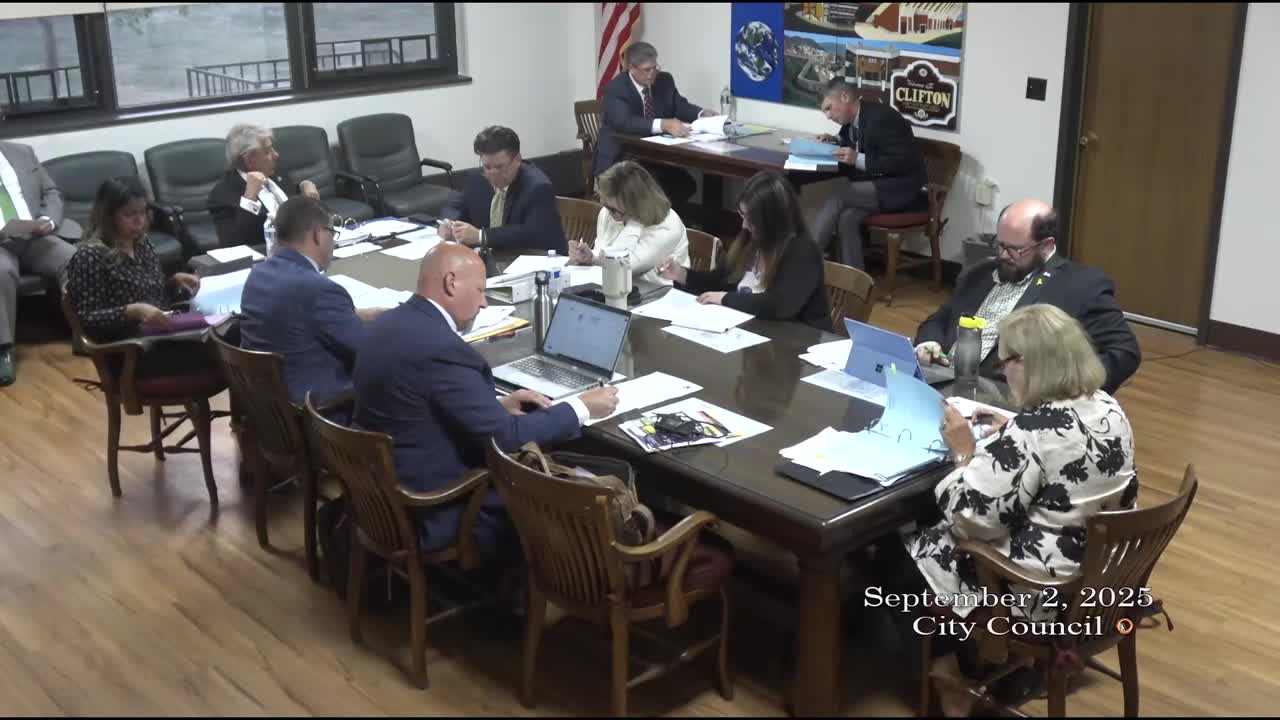
Summary
The Clifton City Council voted to amend a proposed sewer connection fee ordinance so existing homeowners adding less than 20% more square footage would not pay the new connection charge; council members debated how collected fees should be used and whether the exemption undermines the ordinance’s intent.
The Clifton City Council voted during its Sept. 2 meeting to amend a proposed ordinance increasing sewer connection fees so that existing homeowners whose additions add 20% or less to their home’s square footage would be exempt from the new fee.
The change was approved on a roll call after more than an hour of discussion in which council members debated whether the ordinance’s primary purpose is to make developers pay for infrastructure costs or to raise operating revenue. Supporters said the exemption protects long-term residents making modest additions; opponents said it would undermine the policy’s aim to hold larger new construction accountable for sewer costs.
The ordinance as drafted applies a two-part charge: a usage-based component calculated using New Jersey Department of Environmental Protection (NJDEP) gallons-per-day guidance multiplied by a per-gallon rate, plus a small per-square-foot fee on added building area. Under the council amendment, homeowners whose added square footage is 20% or less of their existing house would not be assessed the new connection fee at first reading.
Council members repeatedly asked administration staff how the new revenue would be recorded and spent. City staff said the municipality now treats most sewer receipts as sewer operating revenues; council members pressed for language dedicating any additional connection-fee revenue to sewer infrastructure. A separate motion to require the money be placed in a dedicated infrastructure fund failed on a later roll call.
Council discussion ranged from technical questions about how the NJDEP formula produces per-unit estimates to broader equity concerns. “People who are building new houses are developers,” one council member said in support. “But the small homeowner who wants to add a bathroom should not be priced out.” Another countered that exempting modest additions could allow much larger additions on large homes to avoid the charge under a percentage test.
Because the item passed on first reading as amended, the ordinance will return for second reading and final vote where council may still alter the text, specify whether dedicated accounting language is added, and adopt the final ordinance.
The transcript shows the sewer-fee item was discussed at length and that the amendment to exempt additions under 20% carried on the council floor after a roll call vote. The council also recorded a separate vote on whether to dedicate the fee revenue for capital infrastructure; that dedication vote did not pass.