
Developer pitches $18 million Heritage Station to anchor East Dundee downtown
Get AI-powered insights, summaries, and transcripts
Subscribe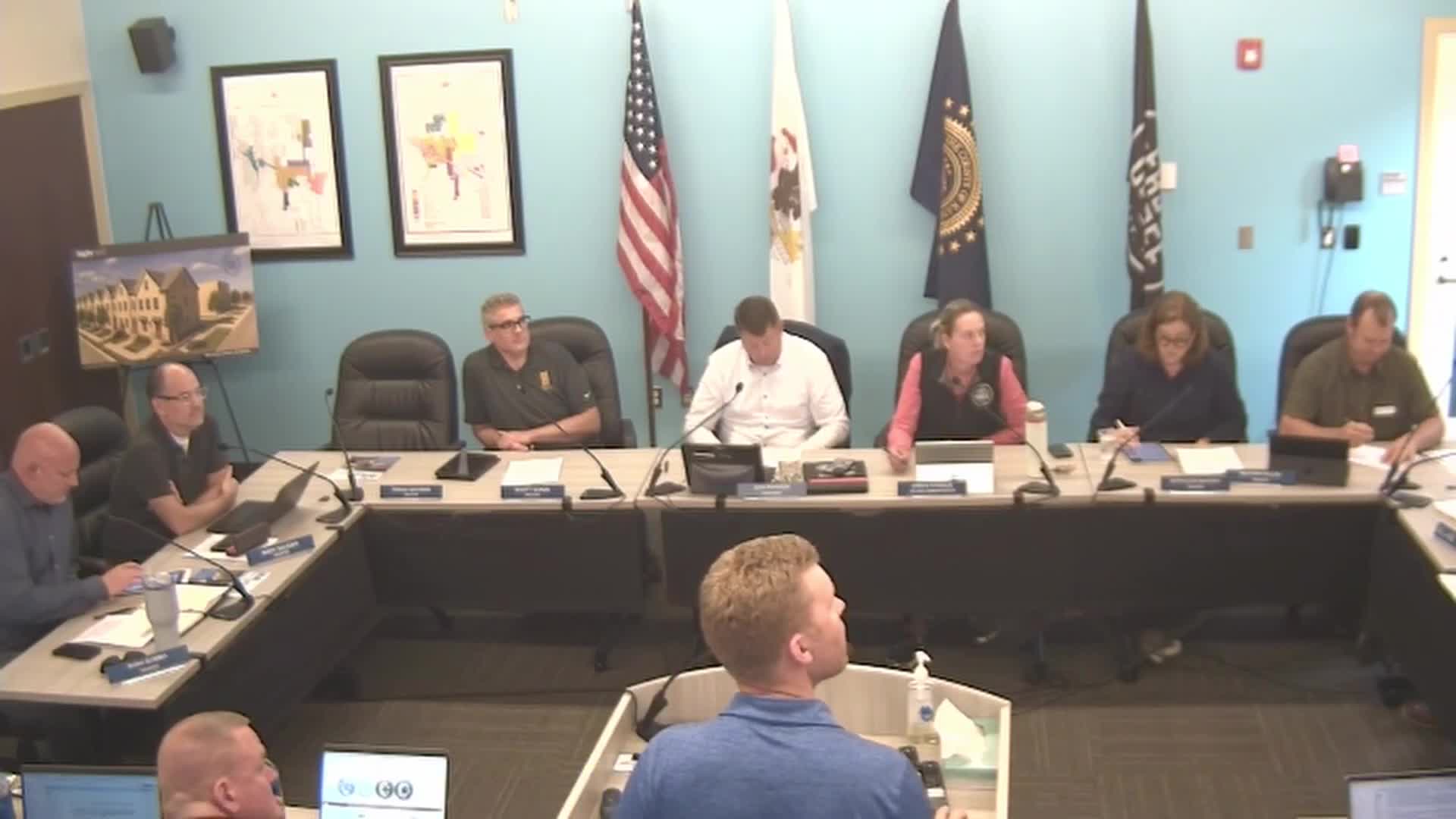
Summary
SiteWell Inc. presented a mixed-use plan called Heritage Station for the former lumberyard at 110 Railroad/110 Mill Road, requesting a $2.5 million TIF back note and village engagement to negotiate a redevelopment agreement.
SiteWell Inc. owners Andy and Suzanne Burns presented a concept plan they call Heritage Station for the former lumberyard block (110 Railroad/110 Mill Road) during the Aug. 4 East Dundee Village Board meeting, describing a mixed-use redevelopment anchored by a performing-arts venue and civic plaza. "This isn't a proposal. It's a vision for the next chapter of East Dundee," Andy Burns told the board, outlining townhomes, street-level retail, an 8,000-square-foot flexible black-box performing-arts center, 10 boutique lodging units and a civic plaza with a landmark clock tower designed to tie into the village's rail history. "Heritage Station isn't just about buildings. It's about giving East Dundee a heart, a place where art, commerce, and community meet," Burns said. The developers estimated the total project cost at about $18,000,000, with roughly $15,500,000 coming from private investment and a request for a $2,500,000 tax-increment financing (TIF) back note to fund civic-facing elements such as the performing arts shell, a Meyer Street extension, stormwater work and the public plaza. Burns said the public dollars would not fund private residences or speculative retail and that the TIF note would be repaid entirely from the project's tax increment. Board members raised several concerns during the Q&A: parking and management of overflow for residential and lodging uses, the site's location within the 500-year floodplain and whether prevailing-wage requirements would apply to the construction. Burns said the team had prepared multiple site plans with different parking configurations and that parking could be engineered on-site or accommodated through alley parking, timed zones, or other tools. On prevailing wage he said the budget was a preliminary estimate and that labor and other costs would be reconciled during negotiations and due diligence. Several trustees praised the design approach and the plan's historic references, and board members asked staff to begin negotiations. At the meeting conclusion of the presentation, President Pearson indicated the board had direction to proceed and asked staff to negotiate a redevelopment agreement and continue community engagement. The board did not vote on a formal redevelopment agreement or on TIF assistance at the Aug. 4 meeting. Why it matters: The proposed block-scale redevelopment would change the former lumberyard block in downtown East Dundee and could generate long-term incremental tax revenue if the village approves TIF assistance; the developers projected a 6-to-1 return over 23 years based on the project's incremental tax impact. Next steps: Burns asked the village to authorize staff to begin negotiations toward a redevelopment agreement and to engage the community; village staff accepted direction to proceed and to return with negotiation steps and details for future board consideration. Ending: No binding commitments or binding approvals were adopted Aug. 4; the board authorized staff to open negotiations and to return with a redevelopment agreement and more detailed analyses for future approval.