
Cheltenham SD reports curriculum work: HQIM adoption, kindergarten math change and new screeners
Get AI-powered insights, summaries, and transcripts
Subscribe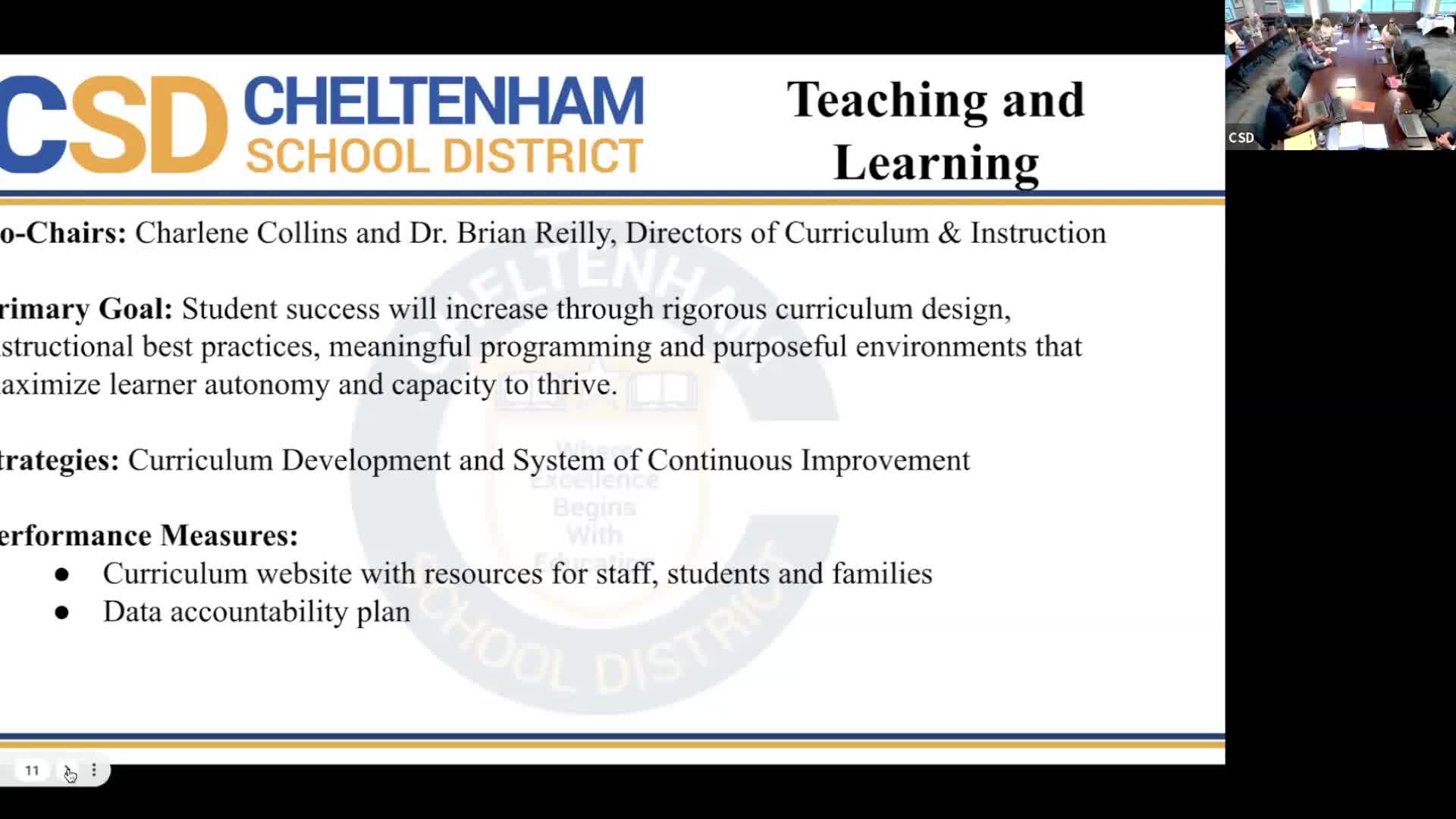
Summary
District directors described curriculum development, adoption of high‑quality instructional materials for certain grades, a switch in kindergarten math to 'Trapezium,' and the expanded use of FastBridge universal screening grades K–9.
Charlene Collins and Dr. Brian Bridal, the district’s directors of curriculum and instruction, summarized this year’s curriculum and instructional work and outlined next steps for the district’s instructional framework.
Collins said the district adopted high‑quality instructional materials (HQIM) for K–5 science and 6–12 math and has developed common assessments, coaching cycles and professional development across grades and subjects.
“Kindergarten teachers have been using Trapezium as a 10‑minute math activity all year. They’ve had a lot of success with it,” Collins said, and the district plans to adopt Trapezium as the core kindergarten math program for next year and monitor student outcomes.
Staff reported expanded use of FastBridge as a universal screener, implemented in grades K–9 this year, and said they intend to better integrate screener results with diagnostic tools. They also described work to refine district assessment philosophy so staff, families and administrators can distinguish screeners, diagnostics, common assessments and high‑stakes tests.
Bridal noted continued curriculum writing for grades 7–12 ELA, math and social studies; development of a K–5 STEM sequence; and work to finalize a standards‑based elementary report card aligned to common assessments. He called out the Penn Literacy Network as a continuing partner for short‑cycle literacy coaching for teachers.
Board members asked about language offerings, the PA Seal of Biliteracy and plans to pilot co‑teaching and universal design for learning (UDL). Staff said they will examine grade‑level language pathways and have a Spanish exploratory option planned for sixth grade at Cedarbrook as part of reconfiguration work. The district also reported a planned pilot co‑teaching placement in high‑school science to address Keystone biology performance.
No formal votes were taken on curriculum items in this meeting; the work was presented as part of Year 2 progress monitoring.