Get Full Government Meeting Transcripts, Videos, & Alerts Forever!
Get email alerts on the Zoning Bulk Yard topic
No spam. Unsubscribe anytime.
Committee considers modest revisions to bulk and yard rules to make home additions easier
Summary
Council Bill 25‑064 would loosen some side‑yard, rear‑yard and lot‑coverage limits in residential zones so homeowners can add modest living space without a variance. Supporters said the changes reduce administrative burden and help retain residents; opponents warned of loss of green space, higher densities, and stormwater impacts.
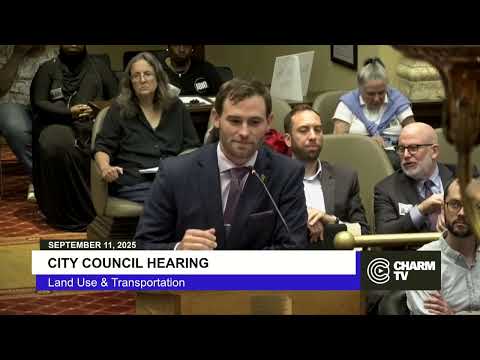
Councilwoman Paris Gray presented Council Bill 25‑064 to the Land Use and Transportation Committee on Sept. 11, proposing targeted amendments to Baltimore's bulk and yard regulations to make modest home expansions easier to approve without a variance.
Gray told the committee the changes are intended to help "the grandparent who makes space for their grandkids" or a family converting a basement so relatives can remain in a home. "This bill makes modest but meaningful adjustments to bulk and yard requirements in our residential districts," Gray said, adding that the measure does not rezone single‑family neighborhoods or permit duplexes or triplexes where they are not already allowed.
What the bill does: technical table adjustments would modestly reduce minimum side‑yard and corner‑lot setbacks in certain residential zones and increase maximum lot‑coverage limits in many residential districts by roughly 10 percentage points from the current code (specific percentages depend on zone). The sponsor and zoning board chair said the changes are targeted at common renovation problems — small additions, decks and accessory dwelling units — that currently require a variance because the code's numerical thresholds were set decades ago.
Leland Shelton, chair of the Board of Municipal and Zoning Appeals, testified in support and said he has presided over many hearings where homeowners and small local developers were stymied by bulk and yard thresholds that do not reflect contemporary household patterns. "I've watched parents and young couples face months of delay not because their neighbors objected, but because the rules did," Shelton said. He and Planning Commission staff urged modest amendments to correct drafting errors in the bill's numeric table.
Opponents at the hearing raised objections on neighborhood‑character, environmental and public‑safety grounds. Speakers argued the changes could result in significantly less on‑lot green space, higher permissible building heights in some zones and new contiguous walls between row houses. One public commenter said the amendment would allow taller rear walls or firewalls back to the alley line in some R‑8 areas and warned that the bill, in combination with other proposals, could permit denser development on row‑house blocks. Others cited stormwater and urban heat‑island concerns and urged the council to pair any zoning waivers with green‑infrastructure requirements.
Agency reports were mixed but generally procedural: the Planning Commission recommended approval with two technical corrections, DHCD filed a favorable report, the Department of Finance supported the bill, and the City Solicitor's office approved it for form and legal sufficiency. The Baltimore Fire Department noted the bill does not change requirements for building‑plan review or fire‑safety submissions.
No vote was taken; the committee chair said amendments will be circulated and the measure will return for further consideration. Committee members asked the sponsor to work with planning and public‑works staff to add stormwater mitigation guidance and to clarify community engagement paths for projects that could affect neighbors.
Ending: Supporters said the bill would remove a common procedural bottleneck and help keep families in the city; opponents asked the council to set stronger environmental and neighborhood protections before approving citywide numeric changes.