Get Full Government Meeting Transcripts, Videos, & Alerts Forever!
Get email alerts on the Firearm Hold Liability topic
No spam. Unsubscribe anytime.
Committee pauses firearm-hold liability bill after legal concerns; bill pulled for rewrite
Summary
A bill to limit liability for people who agree to hold another person’s firearm was presented but drew legal questions about scope of immunity, National Firearms Act items, and whether Wyoming's Good Samaritan provisions apply; the chairman pulled the draft for redrafting and further consultation with the senator who raised it.
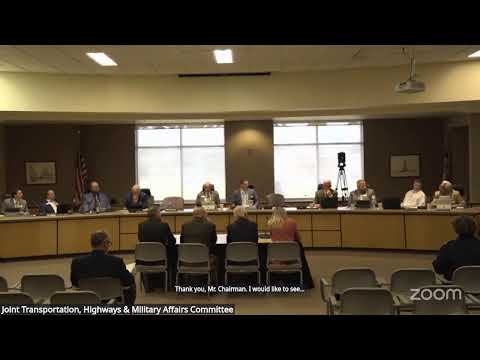
Talise Hansen, staff attorney with the Legislative Service Office, presented bill draft 26LSO33 on Aug. 18, a measure that would create a statutory limited-liability framework for "firearm hold agreements" — written or oral agreements under which a third party takes temporary possession of a lawfully possessed firearm to reduce self-harm or risk.
The draft would bar civil causes of action against a person who returns a firearm at the termination of an agreed hold unless the return resulted from breach of contract or unlawful conduct. It would not apply to items covered by the National Firearms Act (NFA). The bill was modeled on earlier work from a prior session but prompted immediate questions from committee members and the military department’s legal counsel.
Legal staff and committee members raised four core concerns: whether statutory "immunity" as drafted is too broad (a blanket bar to causes of action), whether existing Good Samaritan-style protections would already cover similar conduct, whether oral agreements are sufficiently clear and provable in court, and whether the bill’s subsection excluding NFA items is drafted precisely enough. Lieutenant Colonel Karen Henkel, senior legal counsel for the Guard, told the committee the Good Samaritan expansion enacted in 2025 may not be sufficient to provide the desired protection in all circumstances and that the absence of case law leaves uncertainty about how courts would interpret the statute.
Senator Kolb and others pressed the staff on the NFA carve-out; committee counsel suggested clarifying the language to exclude NFA-regulated items by explicit citation (for example, 26 U.S.C. § 5845 definitions) rather than the existing line that risked ambiguous reading. Public commenter Bill Winnie, a Navy veteran, urged support for measures that help reduce veteran suicides but also noted the need to address practical questions such as whether a temporary holder can reliably ensure a firearm is returned safely.
After extensive back-and-forth on liability scope and the NFA carve-out, Chairman Brown exercised chair prerogative to pull the draft from further consideration at the meeting and asked staff and proponents to consult with Senator Nethercott (who raised similar concerns about indemnity in prior sessions) and legal counsel to rework the draft. The committee took no formal vote on the bill; the chairman said the draft would be revisited only after reworking.