Get Full Government Meeting Transcripts, Videos, & Alerts Forever!
Get email alerts on the Commercial Driver ELP topic
No spam. Unsubscribe anytime.
Wyoming committee asks staff to draft English‑proficiency law for commercial drivers after FMCSA policy reversal
Summary
After Highway Patrol testimony showing hundreds of inspection findings, the Joint Transportation Committee voted to request a bill draft modeled on Oklahoma that would make English‑language proficiency for commercial motor vehicle drivers enforceable under Wyoming law and broaden enforcement authority beyond federally certified inspectors
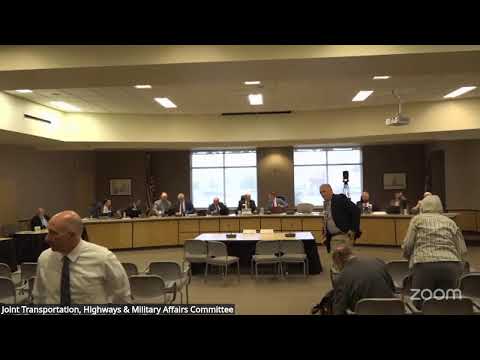
The Joint Transportation Committee voted Aug. 17 to request a legislative bill draft to establish state enforcement for English‑language proficiency (ELP) among commercial motor vehicle drivers, after testimony from the Wyoming Highway Patrol and public commenters who said language barriers are contributing to unsafe incidents.
The committee motion, made by Sen. Dan Kolb and seconded by Rep. Wiley, directs staff to draft language modeled on Oklahoma’s statute that requires drivers to demonstrate sufficient English to understand signs, converse with the public and respond to official directions; the motion passed on a voice vote.
Why it matters: The Federal Motor Carrier Safety Administration (FMCSA) in April 2025 rescinded a 2016 policy that had removed English proficiency from out‑of‑service criteria. The agency’s 2025 memo instructs inspectors to perform a two‑part assessment—(1) an interview to test ability to respond to official inquiries and (2) an evaluation of the driver’s ability to understand highway traffic signs—without use of interpreters or electronic translation aids. If a motor carrier inspector issues a citation for ELP noncompliance, the driver must be placed out of service immediately under federal guidance.
Wyoming Highway Patrol figures presented to the committee show the issue is active in the state. Lieutenant Kyle McKay, assistant commander of the patrol’s commercial motor vehicle division, said: “In 2024, we encountered 379 violations noted on an inspection.” He added that from Jan. 1 through June 25, 2025, inspectors recorded 279 ELP violations, and “since the June 25 date...we’ve had 236 violations where we put drivers out of service for non English speaking.”
Law enforcement and industry officials told the committee the federal framework leaves enforcement gaps. Because only federally certified commercial‑vehicle inspectors can perform a full federal inspection, routine state troopers historically could not take the federal action; several members of the patrol and committee noted that a state statute would allow sheriffs and local police to act where trucks avoid ports of entry and instead travel county roads.
The committee heard public comment from towing and trucking representatives who described repeated incidents in which drivers who could not read or understand signs or directions required extra on‑scene effort and created safety risks. Kevin Hawley, president of the Wyoming Trucking Association, told lawmakers the industry supports serious enforcement and is active at regional safety meetings. Tow operators and carriers described multiple on‑road cases where language barriers complicated accident response and recovery.
Several states have recently responded with statutes or proposals. The staff memo cited Arkansas and Oklahoma as enacting laws this year; Tennessee considered similar legislation. Committee staff said Oklahoma’s statute includes a separate offense for driving after being placed out of service, a provision the patrol noted would help prevent drivers placed out of service from continuing to operate in other jurisdictions.
What the committee decided: By voice vote the committee asked staff to draft a bill modeled on the Oklahoma approach; committee leaders said they will circulate an initial draft to committee members and solicit stakeholder input before the panel’s next meeting.
What remains unresolved: Specific penalties, how state action will interoperate with federal inspection reporting systems (CDLIS/ACD codes), and implementation details (who is certified to test and how replacement drivers are screened at ports) will be part of the bill drafting process.
Key quote: Colonel Tim Cameron, administrator of the Wyoming Highway Patrol, said the agency moved to support enforcement once the federal policy changed: “Once we receive[d] word that the English language proficiency was going to be changed by the president, we started preparing to provide direction and a testing mechanism for our troopers.”