Get Full Government Meeting Transcripts, Videos, & Alerts Forever!
Get email alerts on the Transportation Funding topic
No spam. Unsubscribe anytime.
YDOT warns preservation-only funding leaves little room for major projects; $500M I‑80/I‑25 interchange looms
Summary
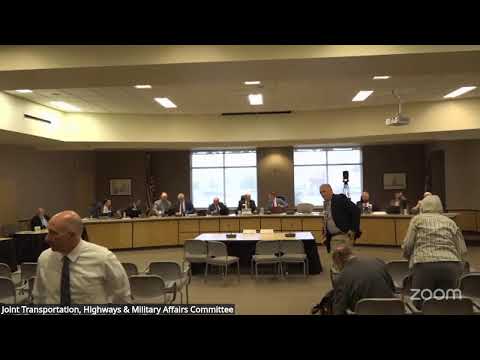
Darren Westby, director of the Wyoming Department of Transportation, told the Joint Transportation Committee in Casper on Aug. 17 that the agency is operating under long-standing “preservation‑only” funding decisions and that state buying power has fallen sharply since 2010.
Darren Westby, director of the Wyoming Department of Transportation, told the Joint Transportation Committee in Casper on Aug. 17 that the agency is operating under long-standing “preservation‑only” funding decisions and that state buying power has fallen sharply since 2010. “Our mission is to provide a safe and effective transportation system. That’s it. Plain and simple,” Westby said.
Why it matters: YDOT officials said federal funds now account for more than half of agency revenues while state revenue growth has been essentially flat; inflation and construction‑cost escalation mean the department can do far less work with the same nominal dollars than it could 15 years ago. Absent new revenue or a major outside match, YDOT and the Transportation Commission will have to prioritize which projects to build and which to defer.
YDOT’s finance team told the committee that federal revenues increased in recent surface transportation bills, but federal receipts are generated from fuel taxes that are not keeping pace with declining per‑mile fuel consumption. Dennis Byrne, YDOT chief financial officer, summarized the effect of policy changes on the agency’s long‑term revenue: “The net impact of de‑earmarking to YDOT is approximately $1,350,000,000,” Byrne said, referring to limits placed on federal mineral royalties and severance tax distributions to the agency over time.
Department presenters walked lawmakers through several near‑term pressure points. The I‑80/I‑25 interchange project, now in design with federal discretionary support for design, currently carries a roughly $500 million construction estimate. Westby told the committee that putting the full project into the Statewide Transportation Improvement Program (STIP) without additional federal match or one‑time funding “would probably decrease where there’s nothing happening in the rest of the state for a couple years.” He said YDOT is exploring federal grants, bonding and one‑time matches to spread project costs.
The department also described an ongoing information technology replacement the agency calls the Transportation Information System (TIS), which was originally scoped at about $80 million for all phases. YDOT sought $20 million in state general funds for phase one but started the work using highway funds after the appropriation was not provided. Taylor Rossetti, deputy director, told the committee the department expects driver‑licensing parts of the project to go live in October and that phase two (motor vehicle registration and etitling) is being planned with an estimated phase‑two price of about $20 million. Rossetti said the agency anticipates completing major work on TIS by the 2027 target established in last year’s legislation.
Officials also flagged several other funding needs: the agency’s customer satisfaction survey is a recurring tool; Byrne told the committee the most recent survey cost about $6,060,000. YDOT said it has reduced vacancies from roughly 346 to the low‑200s through recruiting efforts but that compensation increases strain the same limited pool of highway funds—"every time we have a meeting and somebody asks for something... it's coming off the roads," Westby said. The department reiterated that federal funds cannot be used for routine maintenance such as snow removal or mowing and that roughly 25% of YDOT labor can be billed to federal projects because those employees work directly on federally funded projects.
Air service and capacity purchase agreement funding to preserve service at smaller airports was another near‑term ask the department previewed. Byrne confirmed that the original capacity purchase agreement (CPA) program was funded with $15 million from the Legislative Stabilization Reserve Account (LSRA), plus $8.8 million in ARPA and $4 million from the CARES Act; Westby said the department will seek replenishment of roughly $18.06 million in the next biennium to continue the CPA while markets recover.
The budget presentation included historical charts showing how a dollar of construction work in 1994 now costs about $4.07 and how delaying rehabilitation can multiply future costs. Byrne told the committee the department will update the material for fiscal 2026 and present the commission’s FY‑26 budget in September.
What’s next: YDOT staff will deliver the FY‑26 budget to the Transportation Commission in September; the agency said it is continuing to pursue federal discretionary grants and to coordinate with the governor’s office on possible one‑time matches or bonding for large capacity projects.