Get Full Government Meeting Transcripts, Videos, & Alerts Forever!
Get email alerts on the Tolling Authority topic
No spam. Unsubscribe anytime.
Committee rejects standalone authority to pursue tolls; bill establishing tolling authority fails on roll call
Summary
A bill that would create a statutory framework for future toll projects was opposed by trucking, farm and local government groups and failed a committee vote; supporters said authority would let Wyoming explore options for large capital projects.
The Joint Transportation Committee voted down a draft bill that would have created statutory authority and procedures for statewide toll projects, after industry and county witnesses urged rejection and legislators questioned the policy and administrative burdens of tolling.
Legislative staff member Talise Hansen presented bill draft 26 LSO 0108 v0.8, which would have authorized the Wyoming Department of Transportation and the Transportation Commission to develop project master plans, collect toll revenues into a dedicated account, issue bonds for projects, and require that initial toll rates and any adjustments be set by the Legislature. The draft also required commission approval of project master plans and Federal Highway Administration concurrence before implementation.
Proponents said the statute was intended as a procedural foundation to allow the state to talk with federal authorities and prepare project plans if and when large, self‑funded corridor upgrades—such as to I‑80—come under consideration. "We were not looking at actual tolling," a committee member said during debate. "We're only establishing the authority to do it in the future."
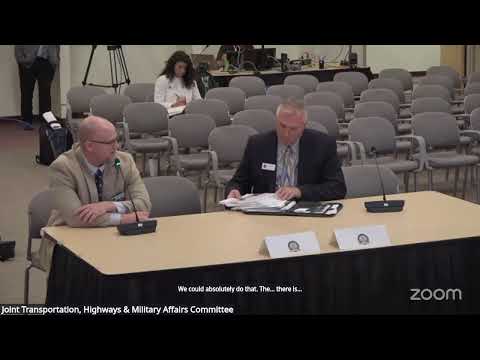
Opponents argued the bill was premature and would impose additional costs on road users and businesses. Kevin Holly, president of the Wyoming Trucking Association, told the committee the association opposes tolling as a funding method and prefers fuel tax approaches because collection systems are already in place and more efficient. "Fuel taxes remain the most efficient and cost effective way to raise highway revenue," Holly said. Independent owner‑operator Kathy Klein said tolling and associated third‑party administrative costs would be an additional burden on small trucking businesses and would encourage traffic diversion to local roads.
Committee staff flagged constitutional and administrative issues in the draft, including a question about whether civil penalties for toll violations would be classified as penalties that must go to county public school funds under Article 7, Section 5 of the Wyoming Constitution. Staff suggested the committee consider the interaction of toll‑violation penalties and the constitution’s allocation of fines and penalties.
After public testimony and discussion, a motion to sponsor the tolling‑authority draft was put before the committee and failed on a roll‑call vote. The official tally recorded in committee minutes was 3 in favor, 10 opposed and 1 excused. "Aye votes: Chairman Pappas and two others; 10 no, 1 excused," the clerk read.
Members who support tolling authority said it would allow the state to seek federal approval and create a structure for future public‑private partnerships or bond‑funded corridor projects. "If we were serious about it, we’ve got to have a structure in place so the department can have the conversation with the federal government," Representative Larson said.
The committee’s rejection leaves tolling authority off the legislative track for this session. Committee members asked for continued discussion about alternative revenue models and noted that tolling—if pursued in future—would come with administrative costs and federal conditions: FHWA historically requires that toll revenues be used to repay project debt and not be diverted to unrelated state needs.
The committee’s action is final for this meeting; staff noted that any future tolling proposals would require new legislation and further public hearings.
(Reporting note: committee vote and staff constitutional questions appear in the official transcript and staff comments.)