Get Full Government Meeting Transcripts, Videos, & Alerts Forever!
Get email alerts on the Fuel Tax topic
No spam. Unsubscribe anytime.
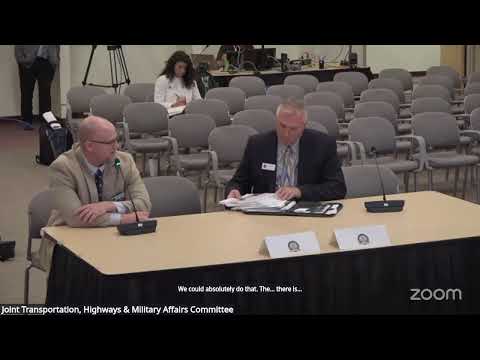
Wyoming committee advances fuel-tax draft but tables final action after debate on impact and indexing
Summary
A legislative working group forwarded a bill to raise gasoline, diesel and alternative-fuel taxes by 5 cents in two steps; lawmakers debated revenue impact, who pays, and automatic indexing before tabling the bill for further work.
A legislative working group forwarded a highway-funding bill that would raise Wyoming’s gasoline, diesel and alternative fuel taxes by 5 cents per gallon in two steps, but the committee tabled final action after lawmakers sought more data and time for public outreach.
The bill draft (26 LSO 64 v0.8), introduced to the Joint Transportation Committee by legislative staff member Talise Hansen, would increase the state gasoline tax from 24 cents per gallon to 29 cents beginning July 1, 2026, and to 34 cents after a second step; diesel and alternative fuel rates use the same schedule. The bill includes conforming changes for credits on nonroad fuel and an effective date of July 1, 2026.
Lawmakers and agency officials said a small increase will not close the department’s multi-hundred‑million dollar funding gap but could preserve parity with neighboring states and capture some revenue from out‑of‑state motorists. "Total for every penny increase, it raises fuel tax revenue by 6,800,000.0," said Dennis Byrne, chief financial officer with the Wyoming Department of Transportation. "Of that $6,800,000, YDOT would receive 4,500,000.0. That's per penny." Byrne’s figures were used in committee discussion to estimate that a 5‑cent increase would generate roughly $22.5 million for YDOT annually.
Committee members repeatedly described the department’s capital shortfall during debate. "We have an annual budget shortfall of about 411,000,000 across the agency," Byrne said, citing a 10‑year estimate. Committee members said even a series of 5‑cent increases would be a partial remedy: "Even 5¢ is kinda like a kiss," one member said.
The working group—made up of legislators and invited stakeholders—also reviewed a Legislative Service Office memorandum comparing seven models used by other states for variable or indexed fuel taxes, but voted not to forward indexing options or a proposed tire fee. "We did look at a bill that would create an indexing formula to index an automatic fuel increase," Pierre Chenier of LSO told the committee, summarizing the memo. The LSO memo noted approaches used in other states: indexing to construction costs (Alabama, Colorado), inflation (California, Michigan), combined inflation and fuel efficiency (Georgia), a population‑weighted inflation formula (North Carolina), price floors/ceilings with wholesale price (Utah), wholesale price only (Arkansas, West Virginia), and a two‑part variable rate tied to wholesale fuel price and legislative appropriations (Nebraska).
Lawmakers pressing for a larger, faster increase said political realities and pump‑price dynamics complicate action. Representative Larson argued the state’s low population per mile of highway means Wyoming collects far less fuel revenue than neighboring states even at similar rates. Several legislators and YDOT staff cautioned that wholesale and retail market dynamics usually blunt the full per‑gallon tax change at the pump; staff referenced a University of Wyoming study showing the net pump effect after a prior 10‑cent increase was limited in duration.
Industry and local government witnesses supported additional investment but differed on mechanisms. Kelly Little of the Associated General Contractors and Kevin Holly of the Wyoming Trucking Association said they back additional highway investment; Holly said his association had a board‑level vote supporting the draft so long as increases are equal across gasoline and diesel and funds are used for highways. Farm Bureau and independent owner‑operators urged caution about downstream costs to agricultural operations and small trucking businesses.
During bill work, Representative Nicholas offered an amendment to consolidate the two 5‑cent steps into a single 10‑cent increase; that amendment failed on a voice vote. The committee later approved an amendment to delay the second 5‑cent step so the first increase would remain in effect for two years before the second step, allowing time to observe market impact. After additional discussion and requests for more data (including copies of the UW study and a rack‑to‑pump impact analysis), the committee voted to table the amended bill until its next meeting so staff and agencies could provide more information.
Discussion only, direction and formal action were clearly separated in committee minutes. The working group had already decided not to forward the indexing or tire fee proposals; the committee voted to move the draft fuel‑tax bill forward for consideration but then tabled the measure to collect additional data and allow more public outreach and amendment work.
The committee asked YDOT to provide analysis showing the 2013 tax increase’s short‑term pump effects and requested more detailed estimates tying fuel‑tax changes to wholesale and retail price movements, inventory impacts for retail stations, and the department’s most recent estimate of the budget gap. The department told members the existing $411 million (10‑year) shortfall was estimated in 2019 and is likely higher now.
If the committee advances the bill at its next meeting, it will still require further floor action and, if enacted, would take effect July 1, 2026 per the draft. For now, the committee’s tabling preserves a window for additional analysis and stakeholder engagement.
(Reporting note: quotes and figures come from Legislative Service Office staff presentations and testimony from YDOT officials and stakeholders recorded in the committee transcript.)