
Council members debate COLA, public-safety pay and temporary trash-billing subsidy while weighing CIP cuts
Get AI-powered insights, summaries, and transcripts
Subscribe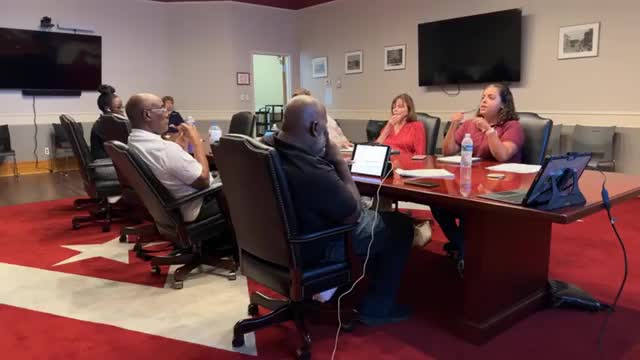
Summary
Council members and staff discussed offering cost-of-living raises, adjusting the public-safety pay scale, possible cuts to the capital improvement program to offset costs, and a temporary plan to cover added trash-billing fees during a transition away from Republic Services; no formal motions or votes were recorded.
Council members and staff discussed a package of employee pay adjustments, potential cuts to the city’s Capital Improvement Program (CIP) and a temporary subsidy to cover added trash-billing fees while the city transitions to a third-party billing arrangement.
At the meeting, a council member summarized pay proposals: “We did offer COLA raises, I believe, for the general pay scale. And then for the public safety, they received … COLA,” and later referred to a roughly “3.1 something, 4 or 5” figure for the public-safety pay-scale increase. The speaker framed those raises as part of broader budget-balancing conversations.
The discussion included an option to reduce the CIP budget for the year to help offset the cost of pay increases. The council member said that two vehicles for the fire department were included in this year’s CIP at “a total of 120,000.” The group also mentioned a cut from a $5,000 line item that had been budgeted and a $6,000 amount referenced for employee appreciation.
A substantial portion of the conversation focused on household trash billing and the city’s move away from its current contractor. One speaker said, “no longer gonna be with Republic come September 30,” indicating a planned end to the relationship with Republic. Council members debated whether the city should continue in-house billing or allow a third party to bill residents directly.
One council member proposed a temporary subsidy during the transition: “for the month of October, November, and December, we would take on the … cost of the additional $5,” to cover added charges while the contractor or the city communicates changes to residents through town halls and outreach. The same member noted concern that outsourcing billing could shift duties away from city roles and that residents would then pay the vendor for added services.
Staff member Miss Leonard confirmed a procedural item related to posting: “That’s correct. If I post it to the public, I already changed. You will not have to renew,” indicating that a public posting or document update had been made and no renewal action would be required.
Speakers also raised facility-utility questions tied to community centers. One participant asked about utility responsibilities for Wiggins and the Carver and Aquatic centers; a respondent said, “So the school pays utilities,” in reference to the school-owned Wiggins facility, and identified separate city facilities (Carver Center, Aquatic Center) as part of the discussion.
No formal motions, roll-call votes or final decisions were recorded in the transcript excerpts provided. Discussion points included pay adjustments, a potential CIP reduction to offset costs, a transitional $5 monthly subsidy for three months for trash-billing changes, and clarification about utilities at school-owned and city-owned community facilities.
Council members said staff would follow up with research and communications work, including contacting disposal vendors to learn what other cities do for in-house billing or how long a vendor might take to implement third-party billing. The council did not adopt a final funding plan in the recorded discussion; next steps appeared to be additional staff follow-up and public outreach.