Get Full Government Meeting Transcripts, Videos, & Alerts Forever!
Get email alerts on the Electric Rates topic
No spam. Unsubscribe anytime.
Leesburg electric fund faces $1.8M shortfall; staff signals likely 3% rate recommendation
Summary
City staff told the Leesburg Electric Advisory Board the utility’s FY26 budget shows about a $1.8 million gap and presented options including a 3% or 5% rate increase, or cuts such as delaying a meter replacement program or reducing depreciation budgeting.
Leesburg Electric Advisory Board members on Monday heard that the utility’s proposed fiscal 2026 budget faces roughly an $1.8 million shortfall and were presented three main options: make no rate change and cut or defer items, raise base rates about 3%, or raise them about 5%.
The shortfall is driven by operating and capital needs, including a roughly $7.0 million capital program split across capital improvements, system repairs and growth; a planned meter change-out program for aging meters; and other mission-critical software and equipment replacements. Brad, a staff member who presented the department’s figures, told the board that projected revenues for FY26 are about $85 million while expenses exceed that level and are not yet aligned.
Why it matters: the board and staff emphasized that the choice affects reliability investments — from a multi-year meter replacement to substation transformers and feeder reconductoring — and customer bills. Al, the city manager, said his “knee-jerk is probably to be recommending the 3%” increase based on the data available now and expected updates before an August/October decision.
Most important facts
Staff presented a three-legged capital plan for FY26: capital improvements (about $2.3 million), system repair (about $2.3 million) and growth-related spending (about $2.4 million). Major projects called out include reconductoring two feeders serving the Fruitland Park area (feeders 702 and 703), and ordering a north substation transformer with about $1.2 million budgeted this year and an expected additional $700,000 next year for delivery and milestones.
The utility has about 30,000 electric meters in service; staff said roughly 20,000 are 2011–2012 vintage and many are losing connectivity to the AMI head-end (they still register usage but do not report remotely). The presented meter-change plan spreads replacement over five years (about 4,000 meters per year) at an estimated annual cost of $770,000.
Staff also described mission-critical software nearing end-of-life: the outage management system (OMS) and a designer tool used for network designs. Replacement procurement and implementation work is planned during FY26; staff noted these are significant items in the system-repair bucket and said the $770,000 estimate is conservative.
Cash, reserves and transfers
The board was shown cash trends: the electric fund peaked near $20 million in 2021 and was roughly $14 million at the presentation, close to the Government Finance Officers Association’s (GFOA) suggested 90-days-of-cash guideline. That position, combined with earmarked capital obligations, leaves a modest cushion — staff said available cash is only about $117,000 above a calculated minimum once earmarks are considered. The fund’s rating was lowered from an A to an A-minus this year, which staff said could raise future borrowing costs.
The proposed FY26 budget includes a $1.6 million transfer to the general fund. Staff described that figure as equivalent to a 6% franchise fee applied to sales within the city limits and said the number is intended to align the municipal utility’s contribution with what an investor-owned utility would provide under a franchise arrangement.
Rate options and customer impact
Staff offered three fiscal approaches to close the $1.8 million gap: make no rate change (and balance with cuts or cash), a 3% across‑the‑board rate increase, or a 5% increase. The presenter explained a 3% increase would generate approximately $2.5 million in additional revenue, exceeding the shortfall by several hundred thousand dollars; a 5% increase would generate still more.
Staff emphasized that a no‑increase approach typically requires cuts to depreciation budgeting and other renewals and replacements, which over time can reduce reliability. "If we continue down the path of not budgeting for depreciation, cutting out maintenance items, what we're gonna see is reliability start to decrease," the presenter said.
Board discussion and public input
Board members and attendees expressed trade-offs between keeping bills low and funding equipment and reliability work. One attendee identified as a resident said, “you can count on [Leesburg] to be the first one power back on,” urging consideration of service quality alongside price.
Next steps
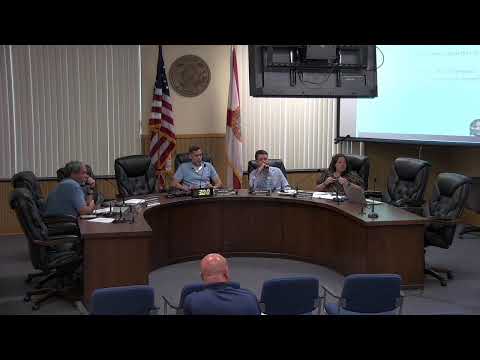
Staff said many numbers will change in the weeks ahead (wholesale power projections, taxable valuations, and summer consumption), and recommended returning to the advisory board at the July meeting for updated recommendations. No formal action or vote was taken at the June 2 meeting.
Ending
Staff indicated a likely recommendation in late summer, and the advisory board will review updated figures at its July meeting before any final recommendation to the City Commission.