
Miami Lakes council budget workshop draws wide public pushback over proposed millage and utility fee increase
Get AI-powered insights, summaries, and transcripts
Subscribe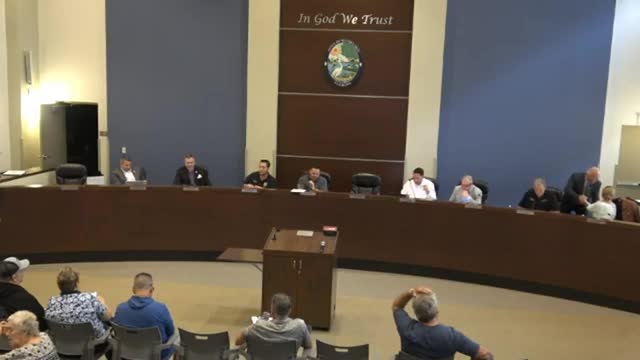
Summary
At a Sept. 3 workshop, dozens of residents urged the Town Council to hold the line on the proposed property tax (millage) increase and to reject a proposed doubling of the FPL franchise fee; councilmembers and staff said no decisions would be taken at the workshop and scheduled formal votes for Sept. 11.
Miami Lakes — Dozens of residents packed Council Chambers and dozens more spoke online at the Town of Miami Lakes’ second budget workshop on Sept. 3, pressing council members to roll back a proposed preliminary millage and to reject a proposed jump in the town’s Florida Power & Light (FPL) franchise fee.
The council did not vote at the workshop; Mayor Dieges repeatedly told speakers the session was for review and instruction to staff. “Under state law, we are required to set an initial millage that will then go out in your TRIM notice so you can plan ahead,” Mayor Dieges said during the meeting, explaining why an earlier, higher preliminary rate was published and how council can reduce it before final adoption.
Residents urged the council to pare the proposed budget rather than raise taxes. “The town’s budgeted revenues have consistently underestimated actual revenues throughout the years,” resident Albert Aguilar told the council; “Against that record, there is no justification for approving a tax increase of this size,” he said. Several speakers also said the town did not publish supporting budget materials far enough in advance for meaningful public review. “Florida statue 1 25 25 sets the rules that 7 day notice is required,” resident Esperanza Reynolds told the council, urging earlier publication of agenda backup.
Other residents described specific household impacts and calculations they had made of the tax and utility changes. Resident Daniel Gonzales told the council how the planned changes would affect his neighborhood and offered concrete examples of increased bills: “The proposed new tax will be $5,412, an increase of $1,281,” he said.
What happened at the workshop - No formal votes were taken. The session was a working meeting in which council members directed staff to prepare revised budget options and additional backup materials for next week’s hearings. The mayor and council emphasized that the preliminary millage originally printed on residents’ TRIM notices was a procedural maximum and that the council can lower it before final votes. - The council set the next steps on the calendar: a special-call meeting on the FPL franchise-fee ordinance and the first budget hearing are scheduled for Sept. 11 (special call starting about 6 p.m.; public budget hearing at 6:30 p.m.). Staff said it will return with alternative budgets that reflect different franchise-fee scenarios (for example, keeping the fee flat at 3% versus an increase) and with line-item details requested by council.
Major issues raised - Millage and franchise-fee increases: Many speakers opposed the preliminary millage that appeared on TRIM notices and the staff proposal to double the FPL franchise fee from 3% to 6%. Council members asked staff to show budget scenarios that hold the millage flat and/or that show incremental franchise-fee alternatives and the specific cuts those choices would require. - Process and transparency: Multiple residents said the town had not posted budget backup with enough lead time to allow effective public review and comment. The council and manager responded by explaining the state timing requirements for preliminary millage notices and promising to publish updated backup as soon as possible. - Specific line items and spending questions: Speakers pressed for details on high-ticket items including the police contract increase, the final payment on a prior settlement (Michael Pizzi settlement), and capital spending such as planned park projects. Staff clarified that the town has approximately $43,000 still to be received as insurance reimbursement tied to the Pizzi matter and that some funds shown in earlier balances were obligated to stormwater projects or other restricted uses.
Direction to staff Council members asked staff to return with: - Two or three alternate budget packages (for example: flat millage with no franchise-fee increase; a trimmed budget if the council rejects the franchise-fee ordinance; and the manager’s recommended package). - A line-item breakdown that clarifies recurring vs. one-time revenue, and the status of buffers such as fund balance, ARPA allocations and stormwater bonds. - A list of required travel and training (to separate mandatory certification costs from discretionary travel) and clear documentation of grants and sponsorships that offset committee costs. - Clarification of the timing and amounts for capital/contract expenditures (including park and tree-trimming phases) and the contract status for recurring services.
What residents and councilmembers said matters Speakers repeatedly emphasized hardship for fixed-income households, rising utility and insurance costs, and a desire to see staff and council demonstrate the cuts that would accompany a decision to keep the millage flat. Council members repeatedly asked staff for a “menu” of cuts (in $250K or $500K increments) tied to specific service reductions so the council can amend revenues and expenses in tandem.
Next steps and what to watch The council will take its first formal votes on the fiscal 2026 budget and the millage at the Sept. 11 public hearing (with a special-call meeting earlier that evening on the FPL franchise-fee ordinance). Staff will publish updated backup in advance of that hearing; council members and staff said they intend to present alternative budgets that show the concrete consequences of rejecting or trimming the proposed franchise-fee increase and of lowering the millage nearer to the flat rate many residents requested.
The workshop produced no final spending decisions but set a clear schedule and list of information the council requested. Residents wanting the council to preserve services or to protect the flat-tax option are likely to return for the Sept. 11 hearings.