
Utilities commission recommends West End sewer upgrade grant application to city council
Get AI-powered insights, summaries, and transcripts
Subscribe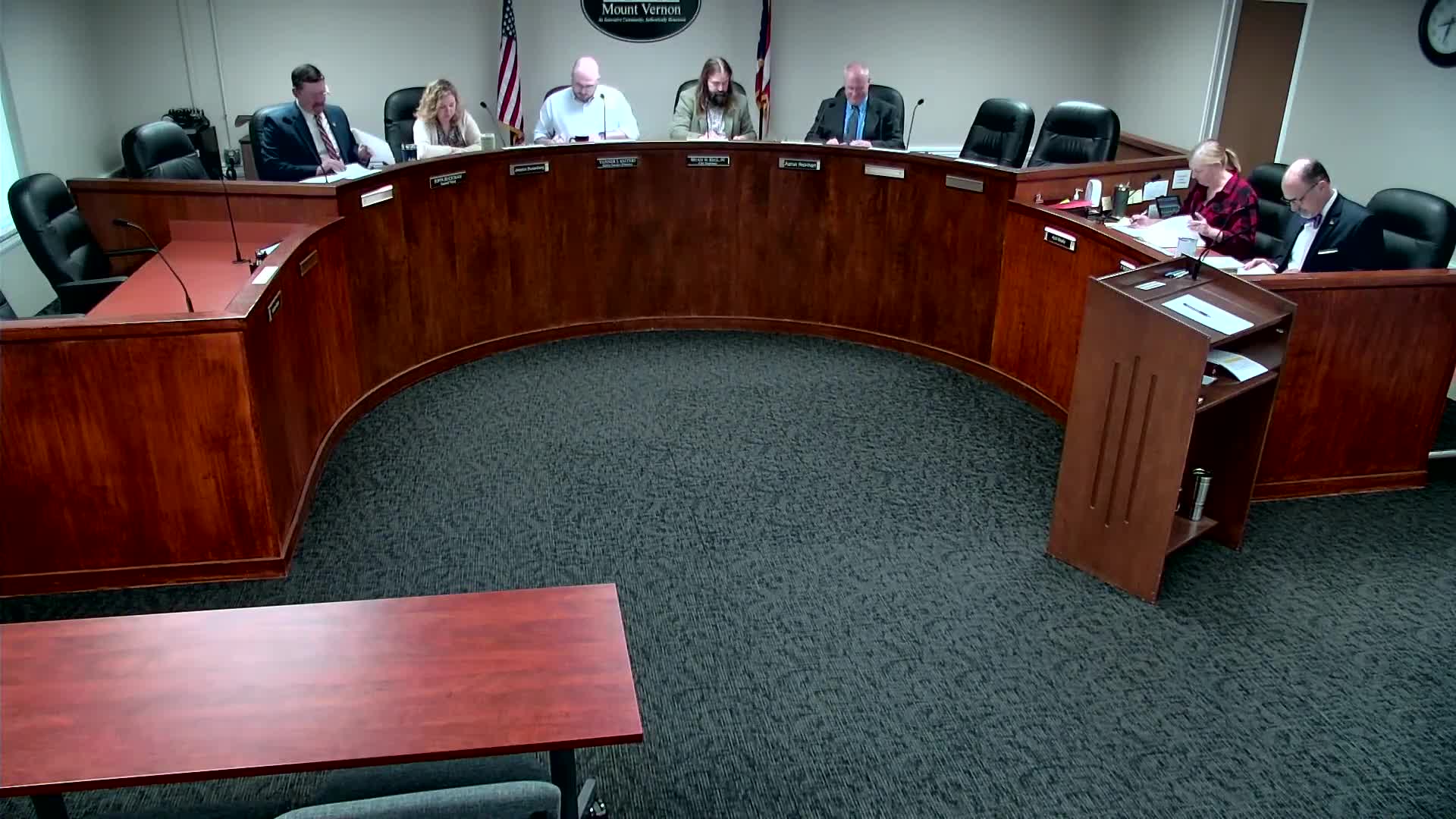
Summary
The Utilities Commission voted to recommend that city council authorize applications for federal CDBG residential public infrastructure funds and state OPWC funds to replace a main trunk sewer in the West End, seek a $750,000 CDBG award and roughly $400,000 in OPWC funds with a $150,000 local match, and pursue sidewalks as a linked follow-up.
The Utilities Commission voted unanimously Sept. 4 to recommend that city council authorize applications for federal and state grants to repair and enlarge the main sanitary trunk serving the West End and to pursue coordinated sidewalk work where feasible. The commission asked staff to prepare an application for a Residential Public Infrastructure Grant (CDBG RPIG) and to seek Ohio Public Works Commission (OPWC) funding while planning a local match.
The recommendation matters because the West End sanitary system runs under the railroad at West Gambier and staff said the trunk line is aging; replacing it would reduce isolated depressions in the road and reduce future maintenance costs, staff said. The presenter told commissioners the phase‑1 scope for the South of High Street trunk replacement and surface restoration is roughly $1.3 million and that the maximum RPIG award the city can seek is $750,000. Staff said they have penciled a $400,000 OPWC contribution and a $150,000 local match, to come from the city’s asphalt funds, wastewater funds or a mix of both.
City staff described the timetable and funding mechanics at the meeting. OPWC’s application window had opened the week of the meeting and staff proposed submitting by the first Friday in November so an authorization could be in place for a July 1, 2026 start. Staff said the RPIG process is first‑come, first‑served and that authorization for federal and state dollars could be received as soon as January 2026; the project could be constructed or reimbursed in 2026 or 2027 depending on design, neighborhood coordination and cost‑share timing. Staff also said District 17 of OPWC recently received an additional $3,000,000 in allocation, which improves the city’s prospects for OPWC support.
Commissioners and staff discussed phasing and funding choices. Staff described a multi‑phase plan for the West End, noting phase 1 is costlier because most work will be in asphalt rather than alleys; staff estimated the full multi‑phase project could reach $4–5 million if the entire West End were replaced. Commissioners asked about coordinating stormwater, mapping assets and opportunities to add sidewalks. Staff said asset mapping would be performed during design and that sidewalk installation could be added to the same contract if sidewalk funds (including the mayor’s sidewalk fund and CDBG critical‑infrastructure funding) were available. Staff noted some sidewalks and stormwater work may be funded if federal rules permit merging RPIG with critical infrastructure in future applications.
The commission also discussed alternatives to paying for the full cost from utility funds. Staff said including asphalt funds in the local match provides flexibility because paving costs are part of the phase‑1 work; staff suggested paving could be completed in a later contract year after settlement and final inspection. Staff said preliminary field design work remains to determine exact limits and to avoid creating projects too large for available grant shares.
After discussion the chair asked for a motion to recommend the West End sanitary renovation project proposal to council. A commissioner moved and another seconded. The clerk called the roll, and the motion carried with recorded votes of “yes” by Mister Sires, Mister Ball, Mister Reinhart and Miss Busenberg.
The commission directed staff to proceed with application preparation and neighborhood coordination and to return with finalized design and cost‑share numbers for council consideration. No final funding commitment was made by council at this meeting; the commission’s action was a formal recommendation to transmit grant applications and supporting materials to city council.