Get Full Government Meeting Transcripts, Videos, & Alerts Forever!
Get email alerts on the County Budget 2026 topic
No spam. Unsubscribe anytime.
Pine County faces roughly $1.6–2.2 million budget gap; commissioners weigh cuts, reserves and hiring limits
Summary
County staff presented a preliminary 2026 budget projection showing a $2.2 million deficit before some proposed revenue assumptions; commissioners debated using reserves, levy increases, and temporary hiring constraints (a proposed two‑month delay before authorizing backfills) to close the gap.
County administration told commissioners that, based on updated numbers, Pine County faces a preliminary 2026 general fund shortfall in the range of $1.6 million to $2.2 million depending on budget choices and revenue assumptions. Staff outlined options including using reserves, limited levy increases, expense cuts and measures to slow hiring to reduce ongoing personnel costs.
Administration reported the larger $2.2 million shortfall figure in July numbers, and said incorporating several staff suggestions (increased interest income assumptions, conservative boarding revenue from the county jail, and targeted staffing decisions) could reduce the gap to about $1.6 million. Staff noted the 2025 budget currently uses one‑time ARPA funds that are not available in 2026 and that health‑care and union contract outcomes remain uncertain.
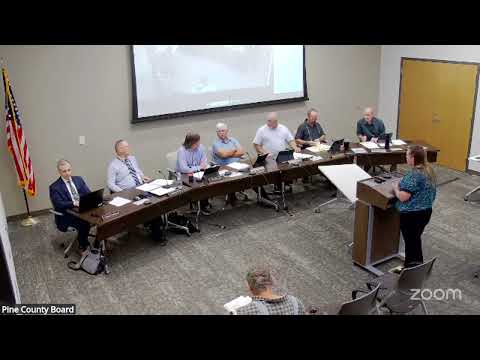
Commissioners discussed several approaches: modest levy increases, drawing from reserves, department‑level cuts and a proposal to delay automatic backfill of vacant positions for two months to allow evaluation of need before authorizing recruitment. One commissioner proposed that, until the end of the year, a vacancy should remain unfilled for two months and that personnel committee review would be required before authorization; the board discussed legal limits on raising the board voting threshold and asked the county attorney for an opinion on whether a supermajority requirement could be imposed by board rule.
Staff also recommended conservative revenue assumptions for the jail (estimating eight boarded inmates per day as a cautious planning figure, which would yield an estimated $160,000 in boarding revenue) and suggested restoring a partial staffing assumption in jail budgeting to 95% to reflect realistic vacancy lag savings. The sheriff’s office staffing request for a position previously funded by grant dollars was raised as a $124,007 incremental cost if filled in 2026 without grant funding.
Commissioners asked staff for targets for levy increases and reserve use to guide department budget reductions; opinions ranged from aiming for a 0–4% levy range, combining modest levy increases with reserves and program cuts, to minimizing reserve use because of the one‑time nature of those funds. Commissioners asked staff to return with proposals that split required reductions between Health & Human Services and other county budgets and to produce options by early September so the board could finalize a preliminary levy later in the month.
No final levy or cuts were approved; staff were instructed to prepare more refined reduction scenarios and to model the fiscal effects of the proposed hiring controls and revenue assumptions ahead of the next budget meeting.