
BestCare outlines behavioral-health housing, plans cottages for ‘aid-and-assist’ clients
Get AI-powered insights, summaries, and transcripts
Subscribe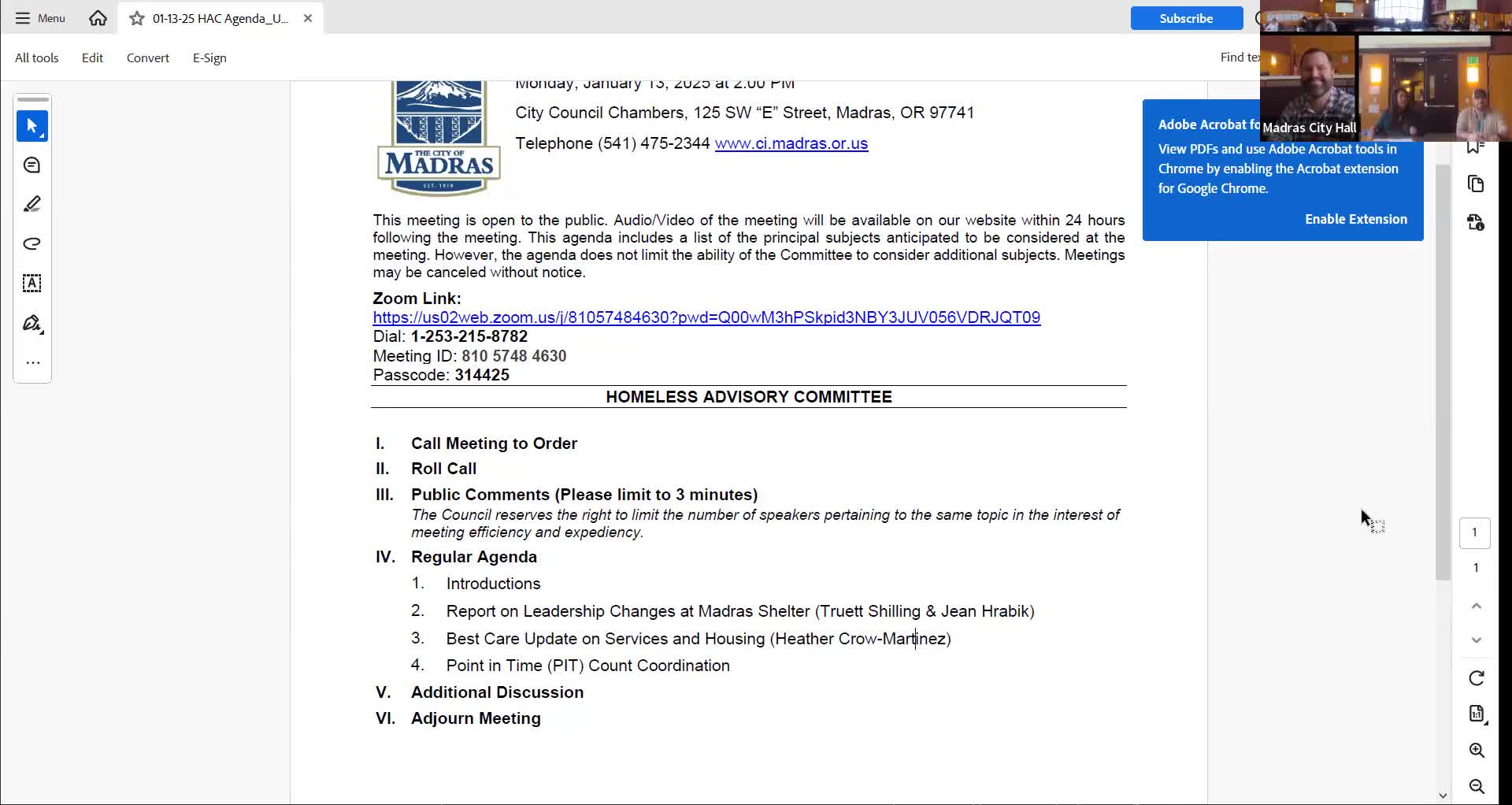
Summary
BestCare Treatment Services described its supportive housing and substance-use treatment housing in Jefferson County, said it now manages 120 state-funded supportive rental-assistance slots, has added SUD treatment apartments, and is planning five cottages to house people coming out of the criminal-justice "aid-and-assist" process.
BestCare Treatment Services told a Jefferson County homelessness and public-health meeting on Feb. 5 that it operates several types of behavioral-health housing in the county and plans five agency-owned cottages intended for people moving out of the criminal-justice "aid-and-assist" process.
The presentation by Heather Crowe Martinez, director at BestCare, outlined three main strands of work: a state-funded supportive housing rental-assistance program for people with serious mental illness, substance-use-disorder treatment housing, and a planned set of cottages to house people who are court-referred as "aid and assist." BestCare said its funding primarily comes from the Oregon Health Authority’s behavioral-health budget.
Martinez provided context for each program and why the county-level services matter. "Our funding primarily comes from the Oregon Health Authority behavioral health," she said. Martinez said the county now has 120 slots in the supportive housing rental-assistance program and that the program combines rental assistance with residential specialists and peer support. "We actually, have a 120 slots now in Jefferson County," she said.
BestCare described the supportive-housing program as targeted to people receiving behavioral-health services who have a qualifying diagnosis of a serious mental illness; the program combines HUD‑approved renter-preparation coursework, case management and peer support, and rental subsidies intended to be a bridge to longer-term housing.
On substance-use-disorder housing, Martinez said BestCare has operated a building (historically known locally as the Trussell Apartments) solely for SUD treatment housing for more than a decade and recently purchased a triplex near F Street that adds capacity for up to 12 clients. That acquisition, she said, used Measure 110 funding and almost doubled BestCare’s SUD housing capacity.
Martinez described a plan to build five cottages that BestCare would own and operate to house people referred from the jail under Oregon’s aid‑and‑assist/forensic evaluation pathway. She said those placements would differ from the supportive-housing slots because BestCare would be the owner and manager of the cottages and the population would often have higher acuity and criminal-justice involvement. She described Juniper Ridge (a secured residential treatment facility) and a state-licensed residential treatment home in Medford as places where some Jefferson County aid-and-assist clients are being placed now.
Martinez said BestCare and county partners are also planning an engagement center funded through Measure 110 that will provide low‑barrier SUD services, case management, peer support and referrals. She described the center as an outreach hub and a place where people under the influence could come to get warm, sober up and be connected to services; she said opening was planned in the near term, around February or March.
Meeting participants pressed BestCare staff on screening and placement criteria for the various housing types, and BestCare staff repeatedly emphasized that placements will be matched to clinical need and level of supervision. Martinez stressed oversight measures: residential specialists, peer support, housing coordinators and case managers would provide ongoing supervision and supports and BestCare would not place people in housing without appropriate monitoring.
No formal vote or ordinance was taken at the meeting. A vice‑chair indicated the group would reach out to an outside presenter, Rick Russell, to learn more about a Redmond "homeless village" model that had been mentioned in public comment.
For now, BestCare’s immediate changes are operational (triplex acquisition, development planning for cottages and the engagement center) and budgeted through a mix of Oregon Health Authority behavioral-health funding and Measure 110 resources; the agency described ongoing work to navigate state placement systems such as secured residential treatment facilities and the Oregon State Hospital.