Get Full Government Meeting Transcripts, Videos, & Alerts Forever!
Get email alerts on the Land Conservation Funding topic
No spam. Unsubscribe anytime.
Commissioners flag conservation funding list, express concern about local tax and trail impacts
Summary
The county board reviewed the Lessard‑Sams Outdoor Heritage Council project list and raised concerns about conservation easements, land acquisitions and maintenance funding for the Munger Trail, noting potential negative effects on county tax base and competing comprehensive‑plan priorities.
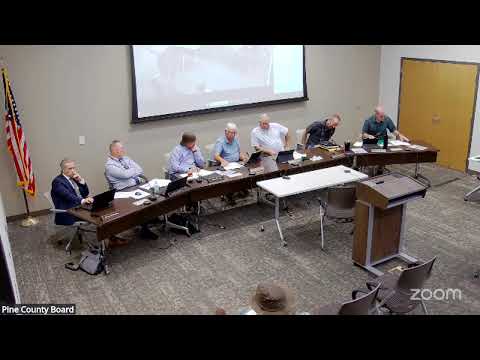
Pine County commissioners spent a portion of the meeting reviewing the Lessard‑Sams Outdoor Heritage Council project list and discussing how recommended conservation projects and acquisitions could affect county tax capacity, planning priorities and recreational infrastructure.
A commissioner summarized the council’s statewide funding pool (about $150 million available this year) and noted roughly $500 million in requests. The county list includes habitat work in the Chisago/Ching areas, trout‑stream restoration on Hay Creek (about 0.5 miles, estimated ~$200,000), Phase 9 work at Barn Spring Wildlife Management Area (~$54,000) and several conservation easements and acquisitions, including 80‑acre parcels in the county.
Commissioners raised three policy concerns: first, conservation easements or purchases remove land from the tax rolls and can reduce county tax capacity, shifting the levy burden to remaining taxpayers; second, some state conservation acquisitions occur without early county input, complicating county planning and watershed coordination; and third, the Munger Trail’s deteriorated sections prompt concern about investing in trail connections when existing infrastructure needs repair.
Board members suggested stronger county engagement earlier in the funding and review process, including routing the project list to local watershed entities (1 Watershed, 1 Plan) and increasing county representation where multi‑county or watershed projects overlap Pine County. The board noted the Outdoor Heritage Council issues recommendations to the legislature and does not itself appropriate funds; the legislature makes final funding decisions.
Ending: Commissioners asked staff to raise these concerns with the county’s soil and water conservation district, 1 Watershed, 1 Plan groups and state contacts so Pine County’s comprehensive‑plan priorities and maintenance needs are factored into funding recommendations.