Get Full Government Meeting Transcripts, Videos, & Alerts Forever!
Get email alerts on the Personnel Paid Family Leave topic
No spam. Unsubscribe anytime.
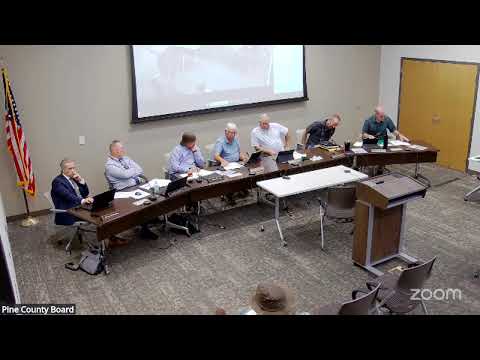
Pine County board approves paid‑family‑leave policy update, pauses decision on deductions for elected officials
Summary
The county board approved a personnel‑committee recommendation updating its paid family and medical leave policy, but deferred a decision on whether elected officials must have payroll deductions taken for benefits they cannot themselves use.
Pine County commissioners on Aug. 19 voted to adopt personnel‑committee recommendations that update the county’s paid family and medical leave policy, while leaving unresolved whether elected officials must contribute by payroll deduction to a program from which they cannot receive benefits.
The change to county personnel policies (section 11.12, Paid Family Leave Act) was moved and seconded during the board’s personnel committee item and approved by voice vote.
The issue of elected officials’ participation drew extended discussion. County Auditor‑Treasurer Kelly Schroeder summarized the administrative approach and said the county’s draft language includes elected officials in the payroll deduction but that elected officials would not be eligible to receive paid‑leave benefits because their salaries are fixed. County Administrator Dave Minkie described the legal ambiguity and recommended the board adopt the policy as drafted while continuing discussion about payroll deductions for elected positions.
An unidentified legal‑advice speaker present during the discussion (referred to in the record as a staff legal adviser) said the statutory text governing the paid‑family‑leave program does not expressly exclude elected officials, and that one commonly read interpretation puts elected officials within the program’s scope. That same speaker also cited a separate statute that they said prohibits reducing an elected official’s salary on account of sick or vacation absence; they presented a contrary legal view that forcing payroll deductions of elected officials who cannot use the benefit may violate that provision.
Members said they would not decide the deduction question immediately. Commissioners discussed waiting for additional legal guidance, reaching out to the Association of Minnesota Counties (AMC) for peer practice, and watching whether the state legislature clarifies the interaction of statutes. Multiple board members urged postponing unilateral action so Pine County would not be the first to establish a deduction practice that could trigger audits or litigation.
The board’s action on the personnel committee recommendations also included standard hires and reclassifications recorded in the personnel packet; the minutes show those recommendations were approved along with the paid‑leave policy update.
The board asked staff to return with a clear recommendation and legal opinion on whether the county can require payroll deductions for elected officials and, if so, how to implement them without reducing a statutorily protected salary.
Ending: County staff said they will gather further legal analysis and compare peer county practices before the board considers whether to authorize payroll deductions for elected officials.