Get Full Government Meeting Transcripts, Videos, & Alerts Forever!
Get email alerts on the Federal Policy And Funding topic
No spam. Unsubscribe anytime.
Congressman’s field representative meets Pine County officials to discuss SNAP cost shifts, tariffs and federal funding requests
Summary
Peyton Crotty, field representative for Rep. Pete Stauber, told Pine County officials the congressman supports efforts to lower state SNAP error rates and is tracking tariff exemptions and community project funding requests; county staff warned that federal changes could shift administrative costs to counties.
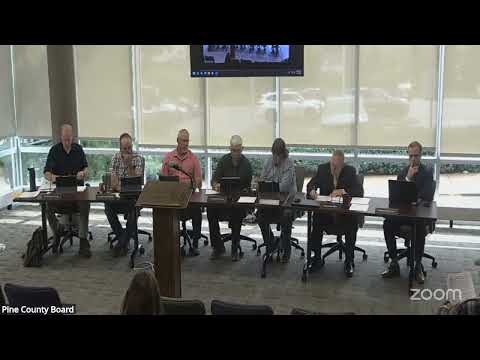
Peyton Crotty, the field representative for U.S. Rep. Pete Stauber, met with Pine County officials to discuss federal program changes that county staff say could shift costs to local governments and to collect requests for federal assistance.
Crotty told the board he is the new point of contact for Stauber’s Forest Lake district office and described two major issues he is tracking for the county: a change in how Supplemental Nutrition Assistance Program (SNAP) error rates affect county reimbursements and requests for tariff exemptions tied to a local manufacturing operation. Crotty said the congressman “commends Pine County quite a bit for keeping their error rates below that 6% threshold,” and that the congressman wants “the all around state rates to be below that 6% rate.” Crotty added, “we wanna help in any way possible.”
County public health staff explained two concurrent cost shifts: an error‑rate driven penalty approach that can reduce federal reimbursements, and a separate reduction in federal administrative cost share for SNAP that would leave counties responsible for a larger share of local administration. Grama Lowe, Pine County public health director (covering for Becky), said the federal share of administrative funding “is being cut in half” and that county governments will likely have to fund more of the local administration.
County officials raised concerns that Pine County’s own error rates have been low in recent years—one commissioner noted an error rate of 0% on some measures—and asked whether a county that performs well could still suffer penalties if the statewide rate remains above the threshold. Crotty confirmed that because SNAP administration is counted at the state level, strong county performance could nonetheless be subject to statewide penalties and said he would put county staff in contact with Washington health‑care staff to explore options.
Crotty also reported on two other items: the congressman’s office is working on tariff‑exemption requests for a local manufacturing facility to reduce import tariffs on necessary equipment, and the office is accepting fiscal year 2026 congressional community project funding (CFP) requests, prioritizing hard infrastructure—roads, bridges and water projects. On questions about an approved large solar project in northern Pine County, Crotty said he did not yet have details on how changes to solar tax credits would affect projects under review but offered to follow up with the DC team.
Crotty told commissioners he would meet with county staff, including Becky and Rebecca (health staff), to clarify details and carry county concerns back to the congressman’s team. The board encouraged continued contact between the county and the congressional office to ensure federal staff understand local effects of program changes.